By Osman Softić || 19 September 2025
By sponsoring peace between Armenia and Azerbaijan, Washington is squeezing out Russia out and getting foothold in the South Caucasus where it never had significant influence.
The Zangezur Corridor
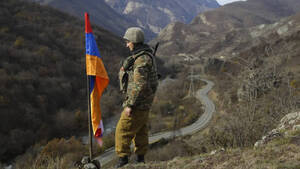 The Memorandum of Understanding (MoU) signed in Washington on August 8 by Armenian Prime Minister Nikol Pashinyan, Azerbaijani President Ilham Aliyev, and U.S. President Donald Trump provides for the unblocking and opening of borders and transport routes, strengthening Armenian sovereignty and territorial integrity (though the Zangezur Corridor essentially contradicts these principles). The corridor, dubbed the “Trump International Route for Peace and Prosperity” (TRIPP), would be managed by American and international contractors.
Former Armenian Foreign Minister Vartan Oskanian expressed concern that his country had fallen into a trap, which Iran had foreseen and warned it would not tolerate foreign extra-regional presence in Syunik. Paying particular attention to peace and stability in this strategic part of Armenia, Iran opened its General Consulate in Kapan, the administrative center of Armenia’s southern region, on October 21, 2002. Oskanian described Syunik as a strategic lifeline and a vital part of the north-south axis. Turning this region into a geopolitical international hotspot threatens Armenia’s security and territorial integrity and poses a significant risk to regional peace and stability.
The weakening of Russia’s influence in the South Caucasus due to its preoccupation with the war in Ukraine has led to more vigorous engagement by Washington and Brussels in this strategically important region, each pursuing their specific but complementary interests. Ankara, in particular, is committed to opening the Middle Corridor, believing it has a unique opportunity, in alliance with Azerbaijan, which it helped achieve victory in the war against Armenia, to establish a direct and seamless connection across the Caspian Sea to the “Stan” countries (Central Asian states), members of the Organization of Turkic States (OTS).
All these states, except for the poorest but historically and culturally significant Tajikistan, which is culturally and linguistically closer to Iran (though not in terms of religious legal schools), have a strong affinity for Turkey. However, each of these states is unique, making rapid economic, let alone political or military, integration with Turkey challenging. As Sunni Tajikistan is culturally close to Iran, Shiite but secular Azerbaijan is linguistically and culturally closer to Turkey than to Iran. In the mythology and programs of pan-Turkic nationalists, the idea of creating a so-called Greater Turan or Turkic world persists, with extreme ambitions of incorporating parts of the North Caucasus up to the Altai Mountains into an imagined Turanic Union. This idea is increasingly promoted by Azerbaijani media, popular culture, music, and folklore as a form of pan-Turkic ethnic, albeit transnational, homogenization.
The Marginalization of Russia
Analysts suggest that Trump, by sponsoring the peace agreement between Armenia and Azerbaijan, could marginalize Russia, which has dominated the Caucasus for the past two centuries. Some Russian analysts have expressed concern that the agreement, among other things, aims to achieve this, although lasting peace could foster greater connectivity, improved communications, and the free flow of people, goods, ideas, and capital. It would also encourage better connectivity between Central Asian states, Turkey, and Europe, which is in the interest of both China and Europe. This issue will likely be a topic of discussion between Trump and Putin in Alaska on August 15, when their meeting is scheduled. It is not ruled out that Putin may secure concessions in Ukraine in exchange for relinquishing some of Russia’s earlier demands in the South Caucasus.
Relations between Baku and Moscow have also recently reached their lowest point, particularly after the downing of an Azerbaijani passenger plane over Chechnya and several incidents between the two countries (the arrest of Azerbaijani criminals in Russia and the expulsion of Sputnik journalists from Baku, who were operating illegally and accused of espionage). Relations between Russia and Azerbaijan are strained, even though Moscow tolerated Azerbaijan’s military operations against Armenian separatists in Karabakh. This was a clear signal of retaliation against Pashinyan, who refused to request military intervention from the Moscow-dominated CSTO during the last conflict. It is possible that Putin will settle for Azerbaijan’s consent to provide Russia with unimpeded access to a corridor through Azerbaijani territory. This refers to the International North-South Transport Corridor (INSTC), which aims to connect Russia with India and the Persian Gulf via Azerbaijan and Iran. The INSTC is equally important for India, Russia, and Iran, and once operational, it could have invaluable significance for developing north-south trade.
The Iranian Factor
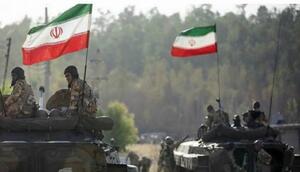 Iran has officially welcomed the finalization of the draft peace agreement between Baku and Yerevan, describing it as a significant step toward achieving lasting peace in the region. However, concerns in Iran persist regarding the potential misuse of the corridor, which could serve as a pretext for isolating, blockading, and containing Iran, with American armed units (albeit referred to as private security) potentially stationed near its northern borders. Iran fundamentally opposes any border changes in the region.
Ali Akbar Velayati, a senior advisor to Iran’s Supreme Leader Ayatollah Ali Khamenei, stated that Iran would prevent the creation of what he called an “American corridor,” regardless of Russia’s stance. This former Iranian foreign minister and key architect of Iran’s foreign policy doctrine warned that the Zangezur Corridor, as presented by Trump, would become a “graveyard for Donald Trump’s mercenaries.” Iranian President Masoud Pezeshkian plans to discuss this issue with his Armenian counterparts during his upcoming visit to Yerevan. General Yadollah Javani, deputy commander of Iran’s Islamic Revolutionary Guard Corps (IRGC) for political affairs, condemned the decision by the Caucasian duo to greenlight the U.S., U.K., and NATO to establish a presence in the Caucasus, where they previously had no significant influence.
Javani claimed that Trump’s move has united Iran, Russia, China, and India against Baku and Yerevan, warning that this “destructive act will not go unanswered.” At this moment, it is difficult to discern Putin’s true intentions on this matter. Washington’s intentions regarding the implementation of the Zangezur Corridor have bolstered Turkey’s position as NATO’s primary bridge to the Caucasus. Turkey will use this to strengthen the Middle Corridor and deepen ties with the “Turkic world.” Turkey approaches the Zangezur Corridor cautiously, avoiding provoking a revolt or open conflict with Russia and Iran.
The corridor also presents an excellent opportunity for Israel, which will use it as a platform to extend operational depth to Iran’s northern border. Additionally, Trump’s ambassador to Ankara, Tom Barrack, a diplomat and real estate tycoon with broad authority from Trump for the region, does not hide his desire to expand the Abraham Accords to the South Caucasus, enticing Baku’s political elite to join, given Azerbaijan’s status as one of Israel’s closest strategic allies. It is in Israel’s interest to have another majority-Shiite state, alongside Bahrain, join the Abraham Accords.
The Zionists’ Plot
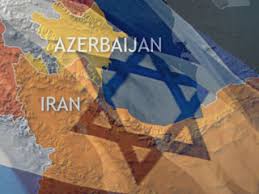 Tel Aviv aims to demonstrate that it can maintain close relations with Shiite states that do not follow Iran’s revolutionary theocratic model. Azerbaijan is one such state and is not Arab. However, Israel’s intentions toward Iran are far more insidious. Israel seeks to exploit the new geopolitical paradigm in the South Caucasus to fuel separatist aspirations among Iran’s ethnic Azeris, encouraging them to identify with Azerbaijan’s regional ambitions on ethnic grounds. In other words, Israel’s strategy is to subtly encourage Azerbaijan to expand its regional ambitions to spark a chain reaction of pan-Azerbaijani nationalism and sow chaos in Iran.
This would incite Iran’s largest single ethnic community, the Azeris, who are perfectly integrated into Iran’s fabric (Iran’s President Pezeshkian and Supreme Leader Ayatollah Ali Khamenei are Azeris), to trigger a Balkanization of Iran, akin to the former Yugoslavia, at an opportune moment. Baku and Tel Aviv have long maintained close security cooperation that goes beyond typical diplomatic or trade exchanges. Israel sells sophisticated weapons and shares intelligence with Aliyev’s regime in Baku. Tel Aviv uses Azerbaijan’s territory to project power toward northern Iran, conducting espionage and surveillance operations. Meanwhile, Armenia is frantically trying to break free from Moscow’s embrace and align with Western states, cultivating close ties with the U.S. and the EU.
There is no doubt that one of Washington’s strategic, undeclared goals in the Caucasus is to limit Iran’s maneuverability and influence in the South Caucasus, after Israel, as Washington’s spearhead and eyes and ears in Western Asia, succeeded in reducing Iran’s influence in Lebanon and completely expelling it from Syria. Trump’s administration aims to prevent the continuation and development of organic trade and energy routes by initiating new ones that bypass the territories of America’s rivals and adversaries, Russia and Iran. This is why Washington seeks to pull the Caucasian duo, Yerevan and Baku, into its orbit. The reason behind this is the intent to fully control Armenia and Azerbaijan and prevent their territories from becoming part of the International North-South Transport Corridor (INSTC), as long agreed, which would vertically connect Russia with Iran and India.
The New Global Order
Ultimately, isolating two significant regional actors in the South Caucasus, Iran and Russia, is intended to pave the way for Turkey, the only reliable regional actor that the Americans and Europeans trust and do not consider a threat to their strategic goals. Ankara will be allowed limited independent action, as its strategic objectives largely align with and fit into the U.S. vision of a new global order, despite Turkey’s rhetoric and theatrical posturing as a sovereign actor and the unchallenged leader of the Muslim world.
On the contrary, Washington sees Turkey as a reliable (albeit occasionally unpredictable and seemingly defiant) NATO ally, perfectly positioned to enable the U.S. to maintain global dominance, which cannot be sustained without influence in the Caucasus, necessitating Ankara’s cooperation. In this constellation of relations, Iran faces regional isolation and encirclement. Iran is an obstacle to American global dominance because it is a large, wealthy, powerful, but above all, sovereign and independent state.
Iran will be adjacent to the Zangezur Corridor along its border, and the corridor could serve as a prelude to establishing American strategic espionage and surveillance installations near Iran’s northern border. Additionally, the corridor’s construction could disrupt Iran-Armenia trade, which has doubled in recent years, as Yerevan has served as an outlet for Iranian goods and a channel for trade between Iran and Russia. The corridor between Azerbaijan and Nakhchivan would cut off Iran’s direct land access to Armenian territory.
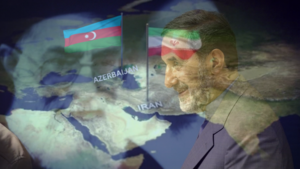 Another detrimental consequence for Iran could be the loss of oil swaps with Azerbaijan. These swaps are mutually beneficial: Iran receives Azerbaijani oil at its northern border and delivers an equivalent amount of oil with similar specifications from its domestic production in the Persian Gulf to Azerbaijani buyers.
Without any physical oil transfer, Iran earns foreign exchange revenue per barrel, and the Tabriz refinery is supplied with oil imported from Azerbaijan at the lowest transport cost from the oil-rich Khuzestan province in southwestern Iran. If the corridor becomes operational, Iran’s foreign exchange revenues would be lost, and the cost of transporting oil from Khuzestan and other oil fields to the Tabriz refinery would increase.
The corridor’s consequences for Iran could include exclusion from the trade route connecting Turkey to Central Asia. The presence of NATO on Iran’s northern borders, discussed in expert circles for years, would pose a serious security risk, similar to the one that prompted Russia’s invasion of Ukraine. Although alternative routes to Nakhchivan exist, Baku has rejected all other options. Its insistence on the Zangezur Corridor fuels suspicions in Iran and Yerevan’s opposition, especially since two other potential routes—the old Soviet route and the Aras route along Armenia’s border—would not be as problematic from Iran’s perspective.
Baku insists on a direct link between its two territories through Armenia without interference or border checks. Trump’s team offered an innovative solution, which Ali Akbar Velayati called a “snake hatched between Armenia and Iran.” Never before has an American boot been on Iran’s northern border, at a point where Iran is most defensively vulnerable. Most analysts wonder how Iran will react if even Armenian Prime Minister Pashinyan has approved and signed a project he previously claimed undermines Armenia’s territorial integrity and sovereignty. If Tehran determines that Iran’s security is threatened, it will likely respond, though how it will do so is unpredictable. One thing is certain: it is not Iran’s task to protect Armenia if its citizens and government do not wish to do so.
 Osman Softić is a Research Fellow at the Islamic Renaissance Front. He holds a BA degree in Islamic Studies from the Faculty of Islamic Studies of the University of Sarajevo and has a Master degree in International Relations from the University of New South Wales (UNSW). He contributed commentaries on Middle Eastern and Islamic Affairs for the web portal Al Jazeera Balkans, Online Opinion, Engage and Open Democracy. Osman holds dual Bosnian and Australian citizenship.