
Fadlullah Wilmot || 16October 2025
 The fragile pause amid Gaza’s enduring carnage offers no genuine relief — only a fleeting ceasefire veiling deeper injustice. Yet as Jeffrey Sachs observed, there is at least one reason for cautious hope: “Maybe the fighting is going to stop.” After Israel has “murdered 67,000 people” and “starved hundreds of thousands,” with “many children dying just on a daily basis right now because of starvation,” any cessation of violence offers desperately needed respite.
The total death toll both direct and indirect may have reached 700,000 people. But let us not mistake this temporary respite in the killing for a genuine peace. President Trump’s “Gaza peace plan” is neither a breakthrough nor a viable peace. It recycles a blueprint of occupation designed to enshrine Israeli control, absolve architects of violence, and compel complicity from regional and other Muslim leaders while simultaneously sidelining the Palestinian right to sovereignty and justice.
It didn’t take long for Israel to break the ceasefire as it has already informed the United Nations it will permit only 300 aid trucks into Gaza daily, not the 600 mandated by the ceasefire it just signed. Israel’s excuse was Hamas has been slow to return the bodies of captives killed by their own bombing of civilians in Gaza even though Hamas has explained the difficulties. Then Israeli occupation forces murdered five more Christian and Muslim Palestinians in Gaza City’s Shuja’iyya neighbourhood plus another three in Khan Younis. Israeli soldiers conducted “arson sprees” burning civilian infrastructure including sanitation plants as they withdrew, shelled Jabalia and continued drone strikes
The Illusion of Peace Beneath a Façade of Reconstruction
Cloaked in the language of reconstruction, disarmament, and international oversight, the 20-point plan demands Palestinian submission without reciprocal guarantees. Palestinians are told to disarm before any meaningful sovereignty or reparations are secured. Meanwhile, Israel retains control over Gaza’s borders, airspace, and trade routes that de facto perpetuates occupation. This rebranding does not alter the fundamental imbalance: the occupier still defines the terms of the “freedom” of those who are occupied.
As Sachs bluntly observes, beyond the immediate ceasefire, “all the rest of the so-called peace plan is not agreed. It will never be agreed.” The plan contains “a lot of gobbledygook, but there’s no resolution of the core political issues”—particularly the question that has defined this conflict for decades: Will there be a genuine state of Palestine?
Recycled Faces of Impunity and Imperial Control
The appointment of war criminal Tony Blair to the so-called “Board of Peace” exposes the plan’s imperial DNA. The inclusion of Blair, the man whose lies about weapons of mass destruction helped unleash the Iraq is an insult to every victim of Western militarism and a symbol of how impunity is rewarded with consultancy. This betrayal of genuine mediation reduces Palestinians to voiceless spectators within a colonial framework that prioritises image management over justice.
The plan’s architects reveal their true priorities through their personnel choices. As Sachs notes about the involvement of figures like Jared Kushner: “Everything’s possible in our weird world. We have more flagrant corruption, self-dealing, insider dealing that basically goes without notice.” When those who profit from destruction now position themselves to profit from reconstruction, justice becomes secondary to personal enrichment.
A Society Without Conscience
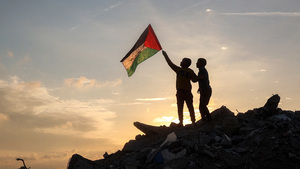 Perhaps most disturbing is what Sachs identifies as a profound moral failure within Israeli society itself. Despite the massive scale of Palestinian suffering, “there is no evidence that in Israeli society there has been any widespread concern about the genocide itself.” While Israeli society mobilizes around the fate of remaining Israeli hostages, “there’s been almost no discussion in Israeli society about the mass killing of Palestinians.” This represents “a kind of destruction of Israel as a normal society,” a society that has “cheered on a genocide and to this moment can’t reflect honestly on it.”
This societal indifference reveals the deeper challenge facing any peace plan: how can sustainable peace emerge from a society that remains fundamentally disconnected from the humanity of those it has systematically oppressed? The plan’s failure to address this moral chasm ensures that any “peace” remains superficial and temporary.
Muslim Leadership Between Complicity and Constraint
The charade extends into the Muslim world, where Gulf regimes that are dependent on American military and financial patronage parade as partners for “stability.” Their complicity hollows out genuine advocacy for Palestine. Indonesia and Pakistan, the world’s two largest Muslim democracies, as well as Türkiye faced intense economic and political pressure to endorse the plan, risking transformation from defenders into accessories to dispossession.
Malaysia was not invited to the U.S.-organised peace summit in Egypt. This deliberate exclusion was due to the fact that Malaysia offered only conditional support for Trump’s 20-point plan. As Prime Minister Anwar Ibrahim clarified, Malaysia insisted that any peace initiative must recognise Palestinian sovereignty and guarantee the right of return for displaced Palestinians. These principles are deliberately omitted in the plan. This exposes a diplomatic environment where only unconditional endorsement is rewarded, sidelining principled voices advocating for justice.
The fundamental question, as Sachs frames it, is whether “the Arab world finally after basically a century of abuse by the British and the Americans starting at the end of World War I until today will… finally stand up and say enough is enough? We’re not going to be bullied, bribed, twisted again with yet another defeat of basic political rights of the Palestinian people.”
Shadows of Dayton: Forced Peace and Its Perils
The historical echo of Bosnia’s Dayton Agreement offers a sobering parallel. Bosnian President Alija Izetbegović reluctantly signed that deal primarily to halt the relentless slaughter of his people. He knew it was deeply flawed but was desperate to stop the genocide targeting Bosnian Muslims. The agreement institutionalised ethnic partition, granting República Srpska nearly half the country and permanent veto power, effectively rewarding ethnic cleansing while freezing injustice in place under the banner of peace.
What makes this parallel particularly disturbing is the underlying animus against Muslim populations in both contexts. Bosnia had been a place where Muslims, Christians, and Jews coexisted for centuries under Ottoman and later Austrian rule. Similarly, Palestine historically embodied interfaith coexistence before the Zionist project’s exclusionist ideology took root. Yet both “peace” processes have targeted Muslim populations specifically—Dayton by legitimising the fruits of anti-Muslim ethnic cleansing, and Trump’s plan by demanding Palestinian disarmament while preserving Israeli control.
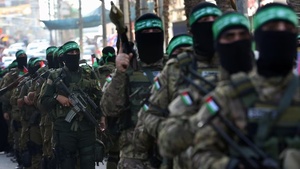 Palestinians now face similar coercion: unilateral disarmament while Israel retains decisive control. Such “peace” risks replicating Bosnia’s paralysis, confining Palestinians to permanent limbo. Hamas’s conditional humanitarian acceptance rejected peace without justice, premature disarmament and imposed governance.
The Mirage of Economic Reconstruction and Corporate Control
Trump’s plan leans heavily on economic spectacle, promising international panels of business “experts” and a Gaza transformed into a high-tech “Riviera of the Middle East.” But the echoes of earlier schemes—touting “voluntary” relocations and AI-planned cities—reveal economic recolonisation, not liberation. The hot microphone capture of Indonesia’s President seeking business opportunities with Trump’s children epitomises how foreign-run special economic zones would turn Gaza into a corporate enclave governed by billionaires and technocrats. Public assets become investment commodities; Palestinians reduced to supervised labour. Development becomes the new disguise of dispossession.
Sachs exposes the cynical reality: “Lots of American companies have gotten quite rich… selling cloud services and AI and genocidal targeting to the Israeli defence forces. This has been a good year for Silicon Valley, which is all over this mass murder in Gaza.” The same technology used to facilitate killing now promises to manage the “peace”—a grotesque continuity that reveals the plan’s true nature.
A Moral and Legal Abyss
Conspicuously absent are enforceable commitments to international law, accountability for war crimes, or recognition of Palestinian self-determination. The silence on reparations exposes the plan as a political façade masking ongoing violations. When business and geopolitics eclipse morality, the result is not peace but managed injustice.
The plan deliberately ignores what Sachs calls “the will of the international community” where more than 90% of the world’s countries have repeatedly called for a Palestinian state. “The UN General Assembly by massive votes with more than 90% of the world community in countries voting yes have called for a state of Palestine on multiple occasions in recent years.” Yet this overwhelming global consensus is dismissed in favour of arrangements that preserve Israeli dominance.
The Grim Calculus of Bloodletting
Perhaps most disturbing is Sachs’s revelation of the calculated nature of Israel’s violence. He notes that a former head of Israeli military intelligence declared early in the campaign that “for every Israeli that died, 50 Palestinians should be killed.” Sachts commented “Maybe they calculate that their mass bloodletting has been accomplished, and now there’s no more purpose to continue bloodletting.” This chilling arithmetic reveals the plan not as genuine peace-making but as the conclusion of a predetermined campaign of collective punishment where a “ceasefire” is declared only after the desired level of destruction has been achieved.
Confronting the Future: Justice as the Foundation of Peace
No durable peace can grow from denial. To rebuild Gaza without ending occupation is to pour concrete over a mass grave.
A just peace must rest on five non-negotiable principles:
a) Full withdrawal of Israeli forces and settlements;
b) Recognition of Palestinian self-determination, including East Jerusalem;
c) Legal accountability for war crimes;
d) Regional solidarity grounded in justice, not expedient alliances;
e) Palestinian-led governance of reconstruction.
Without these, the Trump-Netanyahu plan remains what it is: a blueprint for administering occupation, neutering resistance, and outsourcing complicity to fragile regimes and international businessmen.
As both Sami Hamdi and Jeffrey Sachs warn, this plan seeks Palestinian elimination through different means—”a disarmed Palestine” stripped of agency and dignity. The world must not leave Gaza to this ominous fate but heed it as a dire warning. The ruins of Gaza may be silent, but the graves of its victims still speak, demanding to know where the world will stand. Will we choose the difficult path of justice, or will we once again accept the comfortable lie of “peace” without liberation?
 Haji Fadlullah Wilmot is a Director at the Islamic Renaissance Front. He formerly served at universities in Indonesia, Malaysia and Australia but after the tsunami in Aceh became involved in the humanitarian and development sector. He has worked in Indonesia, the Philippines, Malaysia, Cambodia, Vietnam, Solomon Islands, Bangladesh, Pakistan, Jordan, Lebanon, Kenya, Sudan, Somalia, Afghanistan and Iraq. As a volunteer with the Australian Muslim Advocacy Network he is now monitoring anti Muslim hate speech in the electronic as well as social media that is exploding in response to right wing posts about what is happening in Gaza and also works with organisations supporting Muslim converts.