The Role of Regional Powers and a Danger of Disintegration
By Osman Softić || 18 December 2025
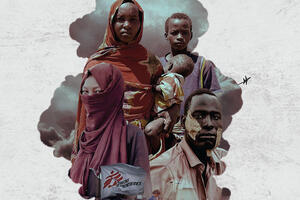 The civil war in Sudan is one of the most brutal in Africa and beyond. According to estimates by the Council on Foreign Relations (CFR), the conflict has caused the most severe humanitarian crisis of the twenty-first century. Because it is in Africa, it does not attract the international attention it deserves.
According to some estimates, since April 2023, more than 150,000 people have been killed and over 12 million have been displaced. Four million have sought refuge in Egypt, Chad, Ethiopia, Uganda, and South Sudan. The war could, according to UN officials, lead to an unprecedented “global hunger crisis.” The main warring parties are the Sudanese Armed Forces (SAF) and the rebels, the Rapid Support Forces (RSF). The war has also taken on a serious regional dimension, making it even more complex.
Background history
Sudan is a large African country of 51 million. It is a natural bridge between the Arab and African worlds. Despite rich natural resources such as oil, gold, and fertile agricultural land, the most recent civil war has driven the Sudanese people to the brink of poverty, famine, epidemics, and complete devastation of infrastructure.
Sudan gained independence in 1956. South Sudan, with international support, seceded in 2011 and became an independent state. According to the International Crisis Group, the second Sudanese civil war (1983–2005), one of the longest in modern history, claimed over two million lives.
The previous authoritarian regime of Omar al-Bashir, which marked the new political period in Sudan after the socialist dictatorship of Jaafar Nimeiri, lasted three decades. Omar al-Bashir seized power in a coup in 1989, overthrowing the democratic government of Sadiq al-Mahdi, leader of the National Umma Party and sheikh of the Sufi brotherhood Ansar, a direct descendant of Muhammad Ahmad (the self-proclaimed Mahdi), a Sufi sheikh and a guerrilla leader against English colonialism and Egyptian-Ottoman rule in the 19th century.
Sudan is also one of four Arab countries that, in 2020, after the fall of the previous order, agreed to normalize relations with Israel under the Abraham Accords. The improvement of relations did not proceed smoothly or in line with Tel Aviv’s expectations. The process stalled due to the military coup, public opposition, and ensuing civil war.
Israel wanted to build close ties with Sudan due to the strategic importance of the Red Sea region, through which 12% of global maritime traffic passes, as well as for economic, and security reasons. After Bashir was removed from the political scene, doors were opened for the potential establishment of diplomatic relations between Israel and Sudan.
Bashir pursued the policy of top down Islamisation and applied a strict interpretation of Sharia law, which, under the influence of Dr. Hasan al-Turabi and Islamists, was proclaimed state law by Nimeiri in 1986. Although he formally came to power through a coup, he was installed as a frontman for the National Islamic Front (NIF). The real mastermind behind the change of power in Sudan was Dr. Hasan al-Turabi, an Islamic theorist of the Muslim Brotherhood in Sudan and the first political leader who established a state based on the principles of political Islam after the 1979 Iranian Islamic Revolution.
Bashir’s coup was merely a mechanism to minimise the perceptions and the Islamic ideological character of the new government in order to avoid international scrutiny and escape pressure on Sudan, the part of the spectacle was Turabi’s arrest at the time. Dr. Turabi was married to a sister of the former President Sadiq al-Mahdi. Bashir became the face of the new Islamist regime but the real leader was Turabi.
In 2018 Bashir faced massive peaceful protests and was subsequently overthrown in a coup in April 2019. The coup was carried out by his senior generals, Abdel Fattah al-Burhan and Mohammad Hamdan Dagalo (Hemedti). The nickname (my protector) was given to Dagalo by Bashir, who entrusted him with command over paramilitary formations known as the Janjaweed (“devils on horseback”) that suppressed rebellions in Darfur.
The Rapid Support Forces (RSF) are the most powerful paramilitary formation from Bashir’s era that refused to submit to the state army. They consist of former Janjaweed fighters. Bashir founded them to suppress rebellions in southern Sudan and Darfur. With Bashir’s blessing, the Janjaweed were reorganized and became the RSF in 2013.
The RSF (Rapid Support Forces) and the SAF (Sudanese Armed Forces)
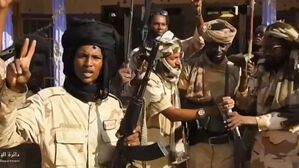 In the meantime, Hemedti became the richest man in Sudan after taking control of lucrative gold mines. Bashir used the RSF as a praetorian guard (protection against coups and assassinations). However, the RSF later allied with the SAF, overthrowing Bashir and establishing the Transitional Military Council (TMC), which later became the Sovereign Council.
It was formally led by Dr. Abdalla Hamdok, leader of the Coalition of Civil Democratic Revolutionary Forces (Sumud), but Burhan was the de facto leader. Hamdok, an economist and a UN diplomat with a PhD from the University Manchester, was overthrown in 2021, he was kidnapped and then reinstated, only to resign in 2022. He enjoys US support. Washington and Europeans consider him the legitimate civilian leader of Sudan, even though he only briefly headed the Transitional civilian government whose negotiations on the roadmap to democratic transition, which he led, ultimately failed.
General Burhan chairs the Transitional Sovereign Council (TSC), with Hemedti as his deputy. Burhan imposed himself as the de facto head of state while Prime Minister Hamdok was merely a figurehead. Officially, the conflict erupted due to political disagreements between the two generals and their opposing visions of Sudan’s political future and the future role of the army in it. However, it was really about economic interests over which the Sudanese army had substantial control in recent decades. After the failed negotiations on democratic transition demanded by protesters and the American and European diplomats, the generals decided to replace the political process with weapons.
The war has been raging for the third year between SAF loyalists and Burhan’s former deputy, General Hamdan. Hemedti refused to integrate the RSF into the regular SAF forces as envisaged by the democratic transition plan. Burhan ordered the dissolution of Hemedti’s Rapid Support Forces and requested their integration into the SAF in 2023. Hemedti refused. He accused gen. Burhan is a covert radical Islamist who does not hesitate to use force against his own people.
The civil war in Sudan affects the security situation in an already unstable region. Sudan, though a poor country (GDP per capita under $1,000), possesses significant energy resources and is among Africa’s largest gold producers. Both warring parties have their own regional allies. The Sudanese Armed Forces (SAF) are openly supported by Egypt. Saudi Arabia does so more subtly, along with Iran, Turkey, Qatar, and recently even Russia.
Hemedti, on the other hand, and his RSF are supported by the United Arab Emirates, and there is wide belief that RSF also receives covert support from Israel. There is evidence that the RSF is indirectly aided by Chad, Kenya, Uganda, and Khalifa Haftar’s regime in Benghazi, Libya. These countries are used as conduits for supplying weapons across their borders to Hemedti’s rebel forces. However, all of them deny their involvement.
Kenya’s role is particularly problematic as it has a privileged status as a non-NATO member which maintains a special strategic relationship with Washington. Besides the warring parties, there is also a civilian population represented by a plethora of pro-democratic organizations that want to transform Sudan into a secular and democratic state.
The “Kezan” or “Felul”
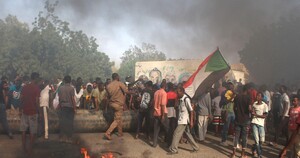 Sudan has long been ostracized as an authoritarian, Islamist, and corrupt pariah state against which international sanctions were imposed. “The RSF claims it wants to establish democracy, but it has become the main perpetrator of terror against ordinary Sudanese people whom it kills, displaces, robs, and rapes,” notes Sudan expert Areej Elhadj. This Sudan expert is very critical of anti-Islamists’ claims that they are fighting against the (Kezan or Felul) a pejorative term which critics use for remnants of the Islamist regime.
The RSF uses this narrative, portraying its rebellion as a legitimate resistance against the “Kezan” to gain support from the Gulf monarchies, the US, and Israel. Crimes committed against civilians by the RSF are presented as a war against corrupt Islamists (Kezan), and looted money from various banks as a wealth purportedly accumulated by the “Kezan,” due to the former regime’s particular emphasis on Islamic banking, which had for decades been widespread in Sudan.
However, despite the RSF propaganda campaigns, a secular oppositional discourse used by the RSF is unsustainable. Dr. Hasan al-Turabi, after being removed from power and influence, toward the end of the first decade of the Bashir rule, became one of the most vocal critics of the regime he had once helped establish.
According to Turabi, “Bashir betrayed the ideals for which we fought”. Dr. Turabi openly criticised Bashir’s regime for the genocide in Darfur, calling for his surrender to The International Criminal Court (ICC) in the Hague and called for renewal and reforms of the system he called “correction of the realm”.
The formal political representative of civilian politics is the former transitional government prime minister Dr. Abdalla Hamdok, the Sumud coalition he leads, various professional associations, and student and trade union movements. Under international pressure, the SAF and RSF signed an agreement in December 2023 with democratically oriented civil society organisations, which, however, did not resolve key political issues.
Hemedti used his earlier military experience in Darfur to build a status as a popular commander of paramilitary militias. His wealth is estimated at seven billion US dollars, which he acquired illegally and attributed to control over mines and gold smuggling through intermediaries in the United Arab Emirates. In Dubai, Hemedti’s younger brother has established a commercial presence where he resides.
On 26. October, 2025, after an eighteen-month siege and starvation of the population, the RSF captured the key city of El-Fasher in Northern Darfur (the main stronghold of the state army in this western province). This shifted the balance of the war in favor of Hemedti’s RSF. El-Fasher was the last stronghold under the previous SAF control until then. Hemedti’s rebels are alleged to have committed mass killings, sexual violence, and expulsions and could be accused of genocide due to mass murders of non-Arab ethnic minorities in Darfur.
According to a report from the Yale University’s Humanitarian Research Lab in the US, satellite images reveal “densely packed objects and changes in soil color,” which researchers believe could be evidence of human bodies. The previous American strategy of maintaining dominant influence in Africa relied on promoting democracy and strengthening civil society and authorities in Sudan.
The December upheaval which many Sudanese call a revolution (2018–19) was, at least partially, the result, besides many internal factors, of this previous US strategy. By overthrowing Bashir’s regime, Washington wanted to overthrow the previous political order which was, at least nominally, based on political Islam and the philosophy of the Muslim Brotherhood.
Therefore, Americans have long pressured Sudan to distance itself from the ideology of political Islam and in particular from the Islamic Republic of Iran. They also wanted to reduce the influence of Iran, Russia and China in Sudan and in this strategic part of Africa. The Control of El-Fasher in Darfur by forces outside the central government had symbolized the Sudanese state prestige for over a century. This regional center served as the administrative hub of the Sudanese central state in Darfur.
The fall of El-Fasher not only was a severe blow to the central authority in Khartoum (temporarily relocated to Port Sudan) but it also signaled a “violent decentralization” of the state and posed a serious danger of territorial fragmentation of Sudan. In other words, parallel centers of political, military, and economic power have already emerged. The centralized state (though comprising 18 provinces) had always characterized the power of Khartoum.
The “two-parts” of Sudan
El-Fasher is the main hub between Darfur and the countries of West Africa and the unruly Sahel region. It is an important economic artery of the RSF’s war economy, which relies on Libya, Chad, and Niger. Since the RSF controls Darfur while the SAF controls eastern and central regions along the Nile Valley and has regained control over the capital Khartoum and coastal areas of the Red Sea, Sudan is practically divided into the two parts controlled by forces with diametrically opposed political visions for the country’s future.
Two rival authorities rule in parallel. The SAF, the nominal guardian of state legitimacy, and the RSF, a new self-proclaimed force controlling gold and arms trade with ambitions to seize power over the entire Sudan. The centralized Sudanese state model which had never really functioned except through the use of force, has now become further weakened.
According to researcher Osman Ali Makki, the moment the peripheral and marginalized communities establish control over resources in parts of the state, they form an alternative form of authority that calls into question the central state’s ability to effectively manage security and resources on the periphery. These dynamic changes the balance of power between the center and the periphery. Accordingly, the old social order in Sudan is in crisis while a new one is just emerging.
The RSF not only wants to seize control of the state but also wishes to dismantle the old power structures and to impose a new, secular order. Hemedti claims he wants to eliminate the political system based on the ideology of so-called political Islam.
The RSF’s military successes would not be possible without sponsors in Abu Dhabi and strategic centers and the intelligence community in Tel Aviv, which apparently acts as the brain behind RSF operations. A recent study: “The Rapid Support Forces, the Sudanese War, and Its Vision”, published by Konrad Adenauer Foundation, argued that the civil war in Sudan has outgrown its ethnic roots.
“The conflict is no longer ethnic but ideological and transactional”, the study claimed. The Arab tribes like Hemedti’s Mahameed clan, part of the Rizeigat tribe led by Sheikh Musa Hilal, find themselves opposed to the central state, which has historically monopolised one (urban) Arab identity while marginalizing its manifestations on the periphery and other non-Arab communities like the Masalit (victims of repression).
The regional actors
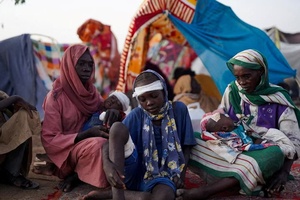 The Sudanese war has attracted numerous regional actors. The UAE plays a key role in this new political war economy. According to some reports, 90% of Sudanese gold (about $16 billion annually) is exported via Dubai. Gold smuggling provides the RSF with weapons, logistics, war financing, and recruitment of new fighters from poor Sahel countries.
According to a 2025 Chatham House study in London, the dynamics of the war for resource control have made Sudanese gold the currency and foundation of the RSF’s regional power. It is wrong to view the Sudanese war through the prism of a conflict between Islamists and secularists or democrats and autocrats, although this discourse is present and further hinders more active involvement by the international community.
By supporting the RSF, Abu Dhabi seeks to strengthen regional influence in the Red Sea region and secure access to strategic resources, especially gold, which is refined in Dubai and exported to markets, particularly Switzerland. The UAE also wants to strengthen control over trade routes into the African interior to access gold and arable land for food production, in which Sudan abounds. Cairo, another major actor, despite close ties with Abu Dhabi, supports the SAF.
Egypt backs General Burhan and views the RSF as a security threat, seeking to preserve the agreement on Nile water resource management. On the other hand, Abu Dhabi, although it helped Sisi come to power, still supports the RSF, as well as Ethiopia’s policy, which Cairo considers hostile to its interests, due to monopolisation of the Nile and the construction of the large Renaissance Dam by Ethiopia, which, according to Cairo, poses a serious security threat to Egypt.
Cairo supports the SAF even though general Burhan partially relies on forces from the former Islamist regime and its irregular armed Islamist militias like the al-Bara’ Ibn Malik Brigade, named after a Muslim fighter from the early Muslim conquests.
Saudi Arabia has a broader and stabilising role and it also supports Burhan and the central government in Port Sudan. It has been a while since Riyadh has been in a serious rivalry with Abu Dhabi when it comes to regional issues. Saudis disagree with Abu Dhabi’s policy in Yemen, Somalia and particularly in Sudan.
Riyadh supports Burhan and the SAF for it seeks Sudan’s stabilisation. Riyadh seeks to preserve its large investments in agriculture and food production and it wants to stabilise the Red Sea region. Riyadh also has major development plans for the future, including the development of mega tourism in the region and building new energy terminals on the Red Sea for future energy exports.
The elusive “ceasefire”
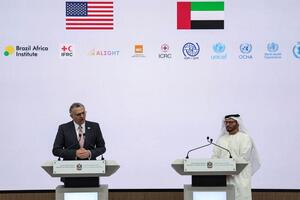 Attempts to establish a ceasefire under the joint sponsorship of the quartet (Egypt, KSA, US, and UAE), coordinated by Trump’s envoy for Africa, Massad Boulos, have so far been unsuccessful due to the SAF’s refusal to make concessions to the RSF rebels.
RSF has allegedly signaled its acceptance of a ceasefire but continued offensives accompanied by crimes against civilians. In addition, the RSF formed an alternative government in Kenya at the beginning of 2025. For this kind of support, Abu Dhabi granted Kenya a 1.5 billion credit /loan to fill its budgetary holes.
This move by RSF has been condemned by all the countries that support Sudan’s territorial integrity, immediate halt of hostilities, renewal of the peace process and stabilisation.
Analysts predict several possible scenarios for Sudan. One possibility is a de facto division of the state into eastern and western parts. Another is a loosely united Sudan (some kind of model along the lines of the post-Dayton Bosnia and Herzegovina), and further escalation of violence and potential RSF advance eastward to seize oil-rich regions, including a potential attack on Khartoum.
The Rapid Support Forces (RSF) captured the largest oil field in southern Sudan on December 8. Capturing this major oil region is a key operation in “liberating the entire homeland,” claim the RSF rebels. The oil pipeline transporting oil from the southern border to Port Sudan on the Red Sea is a key source of revenue for impoverished Sudan, whose economy has already collapsed during the three-year war.
Former Oil Minister Gadein Ali Obeid called the situation a “catastrophe,” saying Sudan has lost its two main oil production regions. Sudan could face fragmentation and a frozen conflict. Washington is considering imposing stricter sanctions against the warring parties, viewing them as obstacles to peace, given the inability of the American envoy Massad Boulos to persuade the warring parties to accept ceasefire conditions.
Norway is also preparing a broader peace conference to include the Sudanese civil society representatives in Oslo in the coming weeks. The proposed conference seeks to establish parameters for a formation of a civilian government after the conflict finally ends. Compromises will be necessary to stop the war. Trump could demand from the Saudis that they stop insisting on preserving Sudan’s “legitimate institutions,” which some critics view as a diplomatic attempt to preserve the existing army under Islamist influence.
Peace is still not in sight and democracy remains on hold. The Sudanese people are collateral damage and a hostage of a fighting for power and control of resources.
Meanwhile, powerful members of the international community seem to be waiting for the warring parties to exhaust themselves and to achieve their maximums on the battlefield before forcing them to sign a new, almost certainly, an unjust peace, that does not rule out the possibility of a new political and territorial fragmentation of this important, African, Arab and the Muslim state.
 Osman Softić is a Research Fellow at the Islamic Renaissance Front. He holds a BA degree in Islamic Studies from the Faculty of Islamic Studies of the University of Sarajevo and has a Master degree in International Relations from the University of New South Wales (UNSW). He contributed commentaries on Middle Eastern and Islamic Affairs for the web portal Al Jazeera Balkans, Online Opinion, Engage and Open Democracy. Osman holds dual Bosnian and Australian citizenship.