
Ahmad Farouk Musa || 31 Oktober 2025
Softcover: 252 pages
Publisher: Islamic Renaissance Front & Islamic Book Trust, Kuala Lumpur
Language: English
ISBN: 978-967-26388-4-1
Product Dimensions: 6 X 9 X 1
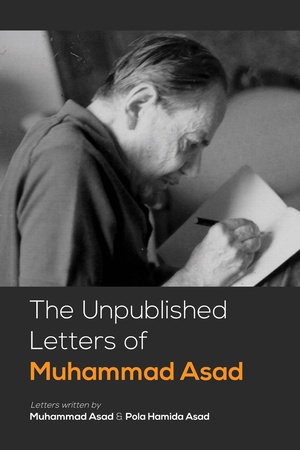 This book stands out as a unique compilation of personal letters exchanged between renowned scholar Muhammad Asad and his wife Pola-Hamida with their friends. Originally published in three separate volumes in the Pakistani journal Islamic Sciences, it is now available in book form. Muhammad Asad remains an enigma to many in both the East and the West. Two of his most celebrated works are Road to Mecca—which chronicles his personal journey into Islam and his extensive travels across the Arabian Peninsula, blending introspective reflections on faith and identity with his spiritual transformation and conversion—and The Message of the Qur’ān, his English translation and commentary of the Qur’ān, celebrated for its clarity, literary quality and its thoughtful interpretation of the Qur’ānic message, making it accessible to modern inquisitive minds.
Yet, this book ventures beyond the literary and intellectual dimensions of Muhammad Asad. It unveils a more intimate portrait of the man himself—a raw and unfiltered depiction of his joy and frustration, his exasperations and pain, his moments of despair and glimmers of hope. It is divided into three sections. The first features twenty-six letters addressed to friends, which offer valuable insight into Asad’s intellectual and personal evolution. As noted by Muhammad Arshad, the compiler of these letters, Asad had written little in English prior to his arrival in the Indian subcontinent in 1932; most of his earlier works were in German (Asad, Muhammad & Asad, Pola-Hamida 2024: p 4). These letters, however, reveal crucial aspects of Asad’s intellectual journey. Although Asad likely learnt conversational Arabic during his second trip to Arabia (1924-1926), he also lived with the Bedouins in the desert to gain ‘an instinctive feel of the language’ (Asad, Muhammad 2011: p xix). According to Asad, only the Bedouins of the Arabian Peninsula, particularly in Central and Eastern Arabia, have preserved the pure, unadulterated Arabic that remained close to the idiom of the Prophet’s time, retaining all its intrinsic characteristics (Asad, 2011: p xix). This profound immersion in the language would later shape Asad’s magnum opus, The Message of the Qur’ān, which he described as the ‘first attempt’ at a truly idiomatic explanatory rendition of the Qur’ānic message into a European language (Asad, Muhammad 2011: p xix).
It is true that Asad makes no mention of his teachers, not even in his letters to his friends. Yet, before embarking on his monumental translation of the Qur’ān, he had undertaken a serious study of Sahih al-Bukhāri in Madinah. In the preface to the first edition of ‘Sahih al-Bukhāri: The Early Years of Islam’ published in 1938, he noted that this volume would be followed by thirty-five more installments of the Sahih (Asad, Muhammad 2013: p viii). Tragically, none of these have survived—though completed—because they were destroyed during the chaos and inter-religious holocaust that engulfed the Indian subcontinent after the Partition (Asad, Muhammad 2013: p ix). Reflecting on this loss in ‘Sahih al-Bukhāri: The Early Years of Islam’, he wrote: ‘With my own eyes, I saw a few scattered leaves of those manuscripts floating down the river Ravi in the midst of torn Arabic books—the remnants of my library—and all manner of debris; and with those poor, floating pieces of paper, vanished beyond recall more than ten years of intensive labour’ (Asad, Muhammad 2013: p ix).
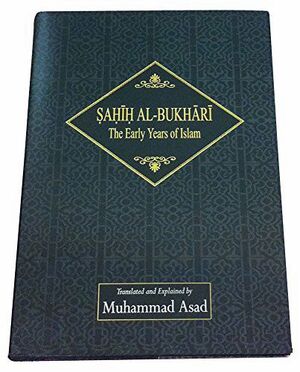 It is important to highlight his study and translation of Sahih al-Bukhāri when addressing the criticism of his detractors—including JAKIM (the Department of Islamic Affairs of Malaysia), who have accused him of lacking a proper understanding of the sunnah in his translation of the Qur’ān. In the Preface to the second edition (1981), Asad reflects on this period with renewed insight and gratitude: ‘[It] gradually dawned upon me that my work on the Sahih al-Bukhāri was not totally lost. On the contrary, I realized with growing conviction that the ten years spent on analysing, translating, and clarifying the Sahih were a God-willed preparation for a work which for a very long time had represented an enticing dream to me: a new rendering into English of the message of the Holy Qur’ān and a commentary based on the principle that the doors of ijtihad have never been and never could be closed to man’s searching intellect.’
Similar sentiments were expressed in the closing remarks of his Preface of ‘The Message of the Qur’ān’ where the author stated: ‘[I] make no claim to having reproduced anything of this indescribable rhythm and rhetoric of the Qur’ān. No one who has truly experienced its majestic beauty could ever be presumptuous enough to make such a claim or even to embark upon such an attempt. And I am truly aware that my rendering does not and could not really “do justice” to the Qur’ān and the layers upon layers of its meaning: for,
If all the sea were ink for my Sustainer’s words, the sea would indeed be exhausted ere my Sustainer’s words were exhausted. (Qur’ān, 18:109) (Asad, Muhammad 2011: p xxiii).
It is, therefore, perplexing that JAKIM and KDN (The Ministry of Home Affairs) deemed the Malay translation of The Message, a decade-long effort by the Islamic Renaissance Front, as heretical, simply because its interpretation diverged from JAKIM’s institutional understanding even for the word “Islam”. For JAKIM, ‘Islam’ is understood as the bureaucratical Islam practiced and regulated in the modern Malaysian context, confined to the followers of Prophet Muhammad. In contrast, Asad conceptualises Islam in its original, Qur’ānic sense as “self-surrender to God,” and a Muslim as “one who surrenders himself to God.” As he elucidates: “[It} is obvious that the Qur’ān cannot be correctly understood if we read it merely in the light of later ideological developments, losing sight of its original purport and the meaning which it had—and was intended to have—for the people who first heard it from the lips of the Prophet himself. For instance, when his contemporaries heard the words Islam and muslim, they understood them as denoting man’s “self-surrender to God” and “one who surrenders himself to God”, without limiting these terms to any specific community or denomination” (Asad, Muhammad 2011, p xxi). Hence, a Judicial Review filed by the IRF against KDN and the Government of Malaysia is currently being heard in the High Court, which has granted leave for the case to proceed (Malaysiakini 2025, Free Malaysia Today 2025).
The second part of the book contains twenty-two unpublished letters written by Asad and his wife Pola-Hamida Asad. These letters shed a new light into his intellectual engagements and reveal lesser-known details about his private and family life. The third primarily consists of correspondence between Muhammad Asad, Pola-Hamida Asad and their most trusted friend, Muhammad Husain Babri—whom Asad described as the best, and certainly most faithful, of all friends, a relationship that endured for more than fifty years through the many vicissitudes of his life. (Asad, Muhammad 2012: p 81). Although much of the correspondence reflects Asad’s frustrations in defending his dignity following his marriage to Pola-Hamida—and the ensuing controversy when the Pakistani Foreign Services refused to authorise his marriage on the grounds that he already had a wife, Munirah, residing in Pakistan—Asad maintained that he had long been estranged from Munirah, with little in common except for their son, Talal, who, along with his mother, was living in London instead (Asad, Muhammad & Asad, Pola-Hamida 2024: pp 28-61). The painful and unfounded allegations that he has renounced Islam also surface in these letters.
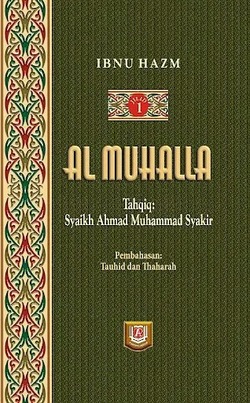 What strikes me most in this book is Asad’s fascination with the medieval scholar Ibn Hazm, whom he refers to as “my Imam al-A’zam” (the greatest Imam). This admiration is mentioned only once—in a letter to his friend Ghulam Rasul Mehr (Asad, Muhammad & Asad, Pola-Hamida 2024: p 24)—where Asad refers to al-Muhalla, a voluminous book on Islamic law and jurisprudence by Ibn Hazm. This association sparked a train of thought for me. Having previously read his Message of the Qur’ān, where he frequently cited Zamakhshāri and Ar-Rāzi, I found his fascination with Ibn Hazm az-Zåhiri somewhat “contradictory”. However, it prompted me to revisit Asad’s works with renewed attention and to recognize the subtle but consistent influence of Ibn Hazm’s rational and textually grounded approach that he references several times in The Message of the Qur’ān.
While I cannot elaborate in detail here, I would like to quote the scholar Josef Linnhoff who made a remarkable observation on this issue (Linnhoff, Josef 2021, pp 425-443). He noted that Asad shares several core principles of the Zāhiri school, particularly in regard to its conception of the shari’a as having a delimited and carefully circumscribed scope. This perspective, he argues, provides the theoretical foundation for Asad’s vision of an Islamic State—one in which the shari’a lays down only the fundamental legal and moral framework, but leaves the elaboration of its details to human reason and interpretation.
It is noteworthy that Asad, despite not having read the works of the eminent thinker Ibn Hazm during his early years in India, later recognized that many of his conclusions closely aligned with Ibn Hazm’s fundamental ideas (Asad, Muhammad 2006: p 2). To Asad, Ibn Hazm ranks highly among a select group of profound thinkers who endevours to liberate the eternal Law from anything that extends beyond the self-evident ordinances of the Qur’ān and the sunnah of the Prophet.
References
1) Asad, Muhammad (2006). This Law of Ours and Other Essays. Islamic Book Trust, Kuala Lumpur.
2) Asad, Muhammad (2011). The Message of the Qur’an. Islamic Book Trust, Kuala Lumpur.
3) Asad, Muhammad (2013). Sahih al-Bukhāri: The Early Years of Islam. Islamic Book Trust, Kuala Lumpur.
4) Asad, Muhammad & Asad, Pola-Hamida. The Unpublished Letters of Muhammad Asad. Islamic Renaissance Front & Islamic Book Trust, Kuala Lumpur.
5) Free Malaysia Today (2025). Think tank gets leave to challenge rejection on Quranic text translation. Available at: https://www.freemalaysiatoday.com/category/nation/2025/07/10/think-tank-gets-leave-to-challenge-rejection-of-quranic-text-translation (Accessed: 10 October 2025).
6) Linnhoff, Josef (2021). A modern-day Zāhiri? The legal thought of Muhammad Asad (1412/1992). The Muslim World; III: 425-443.
7) Malaysiakini (2025). Courts grant leave for IRF to challenge book ban. Available at: https://m.malaysiakini.com/news/748635 (Accessed: 10 October 2025).
 Dato’ Dr Ahmad Farouk Musa is a scholar, researcher, social activist, and public intellectual. He is the Founder and Director of the Islamic Renaissance Front. He holds a PhD in Surgery from Monash University Australia and Masters of Medicine in Surgery from Universiti Sains Malaysia. He is also a PhD candidate in Islamic Studies at Universiti Muhammadiyah Malaysia. This book review was published by the SCOPUS-Indexed intellectual Discourse at: https://journals.iium.edu.my/intdiscourse/index.php/id DOI: https://doi.org/10.31436/id.v33i3.2482