Osman Softić || 16.04.2026
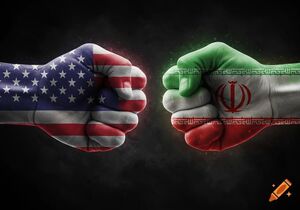 As feared, the Americans and Israel launched missile attacks on Iran on Saturday, February 28 at 9:30 a.m. Tehran time. Although many analysts believed that the buildup of the American army was just a show of force to put pressure on Iran in the midst of diplomatic negotiations, it is now clear that the concentration of such military power could not have been just a simple bluff and that Trump did not plan to abandon the attack.
The American excuse for the attack is, as usual, the mantra that the Americans “must defend the American people by eliminating the threat from the Iranian regime and that they must prevent Iran from obtaining nuclear weapons.” Trump told the Iranians to stay safe until the job is done and then stand up and take over their government.” Iran has also been preparing for retaliation by strengthening its defense capabilities. The recent participation of China and Russia in joint exercises with Iran is not evidence that these two powers will enter into a direct confrontation with America over Iran. That will not happen. China and Russia are not Iranian allies in the way that some observers believe, they are strategic partners and that is not the same. Both countries will help Iran with radar systems, satellite technology, arms sales and provide diplomatic support in the UN Security Council, but they will not enter into a direct conflict with the Americans on the side of Iran.
The conflict is asymmetrical
Iran’s defense capabilities are not negligible either. Iran immediately responded with counterattacks on American bases in the Gulf states. Although Iranian retaliation has been controlled for now and some missiles have been intercepted, Iran has hit the radars of the US 5th Fleet in Bahrain, and attacks have been carried out on American bases in Qatar, the Emirates, Kuwait and Iraq. Although Iran can cause serious damage to Israel and the American military bases that are dotted around the Arab countries of the Gulf and beyond. Whether it can disable an aircraft carrier or sink a destroyer, that we can only speculate about. Aircraft carriers are outdated systems, but they are not unprotected as is superficially interpreted. Even if such a theoretical possibility exists, the question is whether the Iranians would decide to take such a step, because it could provoke American nuclear retaliation. America is a superpower and its military budget is larger than the next 12 largest budgets in the world combined. Iranian military strategists are aware of this and Tehran’s asymmetric defense strategy is planned precisely keeping this in mind.
Iran’s advantage is that its forces know their immediate surroundings better because they have been preparing for an asymmetric armed conflict with the United States for decades. If the Americans fail to disable Iranian missile launchers, air defenses, radar systems and underground missile warehouses in the first strikes, ballistic missiles and drones and neutralize the command structure and communications, the damage they could suffer from an Iranian counterattack would be significant. First strikes on Iran have already recorded human and material casualties. A school was hit, killing over 168 girls. It is clear that the Americans are targeting civilian targets, and the genocide in Gaza is clearly a pattern used as a guide by the aggressors. Iran will inevitably suffer greater destruction and losses than those in the “Twelve Day War” in June 2025. It is uncertain whether the political leadership in Iran will be overthrown. The attacks could even strengthen the Islamic Republic.
Trump between American and Israeli interests
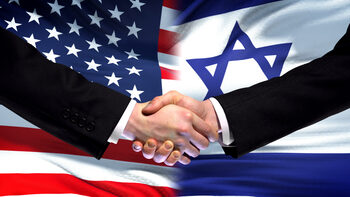
In parallel with the preparations for war diplomatic negotiations on the Iranian nuclear program were taking place. Both sides expressed optimism about the possibility of reaching a compromise solution and there was hope that a catastrophe could be averted. However, the American ultimatums to Iran could not be considered sincere negotiations, but rather blackmail and threats. The Americans demanded capitulation from Iran. The indirect negotiations that were moved from Muscat to Geneva were clearly designed to buy more time for preparations and better positioning rather than a realistic hope for a possibility of compromise. Most observers believe that it was only a matter of time before the American attack on Iran would begin, and there was also hope that this time Trump would not listen to the war criminal Netanyahu and prioritize American interests over Israeli ones and give up the attack.
Although Trump claimed in June 2025 that the US had destroyed three Iranian nuclear enrichment facilities in Natanz, Fordow and Isfahan, this time the pretext for the attack was not only the elimination of Iran’s nuclear program but also broader war goals. Trump wants to disable Iran’s uranium enrichment capacity, destroy Iranian ballistic missiles, factories for their production and eliminate the missile program as a whole. There was also talk of reducing the range of Iranian missiles so that they would not pose a threat to Israel. Trump also wanted to force Iran to end its strategic cooperation with its allies in the region, which they pejoratively call Iranian proxies. Iran considers them the axis of resistance and Israel sees them as the ring of fire (Hezbollah in Lebanon, Hamas and Islamic Jihad in Palestine, the Ansarullah/Houthi movement in Yemen) and the Iraqi Shiite armed formations PMU). Iran was ready to make significant concessions regarding the uranium enrichment program but other American-Israeli demands on Iran were unacceptable and Iran was not prepared to compromise on them because it sees it as the only system of deterrence against aggression which guarantees Iran’s survival. Without these capabilities Iran would have been overrun long ago and would have become a new Libya or Syria.
There is open talk of the assassination of Khamenei
Washington believed that it could achieve its maximalist goals by decapitation (liquidation of the military and political leadership of Iran). There is open talk of the assassination of Iran’s supreme leader, Ayatollah Ali Khamenei. Explosions could be heard not far from his residence. American and Israeli war strategists believe that the decapitation of the “regime” in Tehran would cause chaos, balkanization and fragmentation of Iran and create favorable conditions for the overthrow of the system from within. After that, they would install a puppet government that would carry out orders from Washington and Tel Aviv.To this end, Washington has been preparing the ground for a long time by providing various forms of support to the Iranian extremist diaspora, especially the son of the former Iranian despot, Reza Pahlavi, who lives in America and the terrorist organization Mujahedin Khalq (MEK), whose leadership is in America and France and several thousand militants of this group are based in Albania where they are training for guerrilla warfare against Iran while some serve as an army of cyber bots to demonize the Iranian government. Pahlavi’s recent theatrical appearance in Munich and a large protest rally against the Islamic Republic are part of a broader anti-Iranian Western strategy of pressure and special war.
The US wants to disable Iran from enriching uranium for civilian needs (science, medicine, agriculture, energy, etc.), denying Iran the right to possess legal civilian nuclear technology, although Iran has the sovereign right to do so as a signatory to the international treaty on the non-proliferation of nuclear technology (NPT). Iran’s nuclear program has been rigorously scrutinized by the International Atomic Energy Agency (IAEA) for decades. The agency is partly responsible for last year’s attack on Iran, sending false signals that were used as justification and served as a trigger for Israeli-American aggression. There is suspicion that the IAEA is also responsible for providing information to the Mossad about Iranian nuclear scientists who were later killed.
Israel, oil and gas, Iraq
 In 2015, Iran signed a nuclear agreement with the international community (JCPOA) that resolved the issue of the potential weaponization of Iran’s nuclear program. According to this agreement, Iran retained the right to minimally enrich uranium (about 3.5 percent) in exchange for the lifting of sanctions. Trump withdrew America from the JCPOA, and the Europeans, co-signatories of the agreement, sided with Washington. Trump called the JCPOA a “bad deal” because it focused only on the nuclear program and not on ballistic missiles and Iran’s support for regional allies. Trump therefore accused the Obama administration of helping Iran achieve its regional ambitions by agreeing to a flawed nuclear agreement because the agreement did not address Israel’s demands for “maximum security.” However, this is not a well-founded fear of weaponizing Iranian nuclear technology but a desire to bring Iran down to its knees, to overthrow the existing Iranian constitutional order dating back to the 1979 Islamic Revolution, so that Washington can get its hands on Iranian energy resources and help Israel establish regional hegemony as a supremacist nuclear power under US protection.
Iran, regardless of one’s opinion of Iran’s political system and ideology, is the only country in West Asia that has both the courage and power to oppose Israel’s expansionist and destructive campaign of intimidation, genocide and destruction. Israeli strategists believe that Israel’s “security” can only be guaranteed when no country in the region is able to retaliate against Israeli aggression. This implies a schizophrenic maximalist defense doctrine of Israel, which can at any time implement the so-called Gaza mowing the lawn or Dahijeh doctrine, following the pattern of bombing the southern suburbs of Beirut if it senses that Israel’s neighbors might retaliate. The IDF has demonstrated this in Gaza, Lebanon, Syria, Yemen, and even in the example of the attack on Qatar, which was carried out without consequences for Israel.
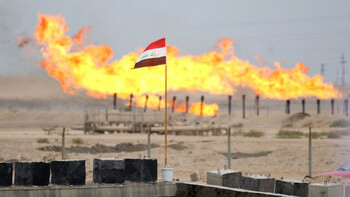
In addition to oil (Iran has one of the largest gas fields in the world – South Pars), which it shares with Qatar. Having established control over Venezuela’s oil industry, the Trump regime also wants to control Iranian oil. Since 2003 Americans have controlled the accounts from the sale of Iraqi oil whereby oil income is deposited in American banks. In this way Washington had full control over the financial system of Iraq which enabled it to effectively manage key political processes in that country. The Shiite armed groups (Hashd) are precisely designed to operate outside the direct command of the Iraqi government. These forces support Iran and the Iraqi government cannot fully control them. This arrangement gives any future Iraqi prime minister who is elected room for maneuver to avoid American sanctions or at least to mitigate them, because he does not have direct control over the Iraqi component of the pro-Iranian axis of resistance to be able to lift them.
The Western public accepts the prospect of aggression
The Western public has been systematically prepared to accept the American-Israeli aggression against Iran as a “necessity” and as a “desirable act of establishing democracy” and “liberating the Iranian people from the theocratic dictatorship.” That is why the false narrative that Iran poses an existential threat to Israel and American interests has been systematically spread. It is striking that no anti-war protests are taking place anywhere in Europe today like those in 2003, before the US-British invasion of Iraq. At that time a protest rally of two million people was held in London alone. Europe has fallen silent today, the Arab world is also silent, some alternative media are reacting while the mainstream media and the press in the West accept the role of supporters and instigators of the war or tacitly approve of it. European countries are divided over the attack on Iran and the EU’s foreign policy representative Kaja Kallas stated that Brussels was in favor of a diplomatic solution, supporting the sanctions imposed on Iran, appealing for calming of tensions. The Prime Minister of Australia, a proven US vassal state, openly supported the US-Israeli attacks. Repeating the standard platitudes about the need to prevent Iran from producing nuclear weapons the Albanese Labor government stated that Iran was a “threat to international peace and security”.
The recent anti-government protests in Iran, which began peacefully and were justified were deliberately hijacked by the Mossad and the CIA. The terrorist groups that the secret agencies armed and planted among the protesters were tasked with, in addition to sowing chaos and fear, helping to shape the narrative and preparing the American and world public to support the American-Israeli aggression against Iran as a humanitarian act of liberating the Iranian people from the “totalitarian ayatollah regime”. The goal of this strategy was to provoke a harsh reaction from the Iranian authorities against the armed gangs in order to prevent this by killing peaceful protesters. That is why the analysis of the protests in the Western media and the opinions of commentators do not mention the armed terrorists. This perfidious strategy failed to overthrow the Iranian government. It was one of the sequences of the war against Iran. The instrumentalization of the protests was the preparation of the Iranian and Western public for what could come later. In this context, the striking absence of any opposition from the Western public to the war against Iran should also be viewed.
Iran after the fall of Syria
 Washington’s policy towards Iran oscillated for decades between military and economic threats, containment, sanctions and isolation, diplomacy and coercion. Earlier forms of confrontation between the Americans, Israel and Western powers on the one hand and Iran on the other, in the form of cyber-attacks, targeted assassinations of Iranian nuclear scientists, diplomats and officers, espionage and proxy wars on territory outside Iran, have moved into the realm of direct kinetic confrontation a few years ago. Iran’s regional strategy was based on building alliances with non-state actors in Palestine, Lebanon, Iraq, Syria and Yemen. From the Iranian perspective, this is an important lever that has complicated a direct military strike on Iranian territory.
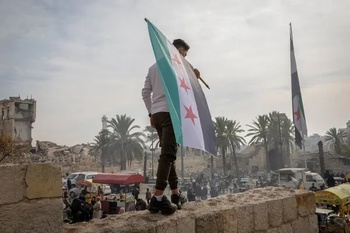
In geostrategic terms, this doctrine of defense (forward defense) has been weakened after the fall of Syria under the control of former designated terrorists ISIL and Al-Qaeda. A few days ago, Trump publicly boasted that he personally installed Ahmed Sharaa as president in Damascus. Iran’s strategy was seen as both regional expansion and an attempt by Iran to destabilize the region. Based on these perceptions, Israel and the Americans built a false but effective sectarian narrative about the Shiite threat, which in extreme forms was presented as neo-Safavid imperialism. The rapprochement between Iran and Saudi Arabia, with the help of China, largely reduced such perceptions as both countries decided that the continuation of the confrontation between Tehran and Riyadh is not worth it.
Total war and Shiite mobilization outside Iran
In addition, Iran is located geographically at an important strategic juncture in Eurasia. It serves as a major link between the Persian Gulf and Central Asia, the Caucasus, South Asia and East Asia. The International North-South Transport Corridor (INSTC) is one of the main trade routes that makes Iran the main transit country between India in the south and Russia in the north. Israel and the Americans want to establish control over this corridor. Unlike the previous ones, the latest confrontation could provoke a wider regional conflict. It is still too early to say how long the attacks on Iran and Iranian retaliation will last and whether they will escalate into a major regional war. Iran’s Supreme Leader Ayatollah Khamenei recently made it clear that any form of attack on Iran would result in all-out war. Warnings from Iraq to the US, Israel and the Arab regimes are also coming from the Popular Mobilization Forces, which number around 250,000 fighters, especially those who have pledged to defend Iran. If Ayatollah Khamenei were to be targeted it could trigger a general mobilization of the Shiite Muslim masses. He is not only the head of state of Iran but also the leading religious and spiritual authority of the majority of Shiite Muslims. His assassination could trigger uprisings and the mobilization of millions of Shiite Muslims in the region and beyond.
A full-scale war with Iran would produce a strong Iranian response, including strikes on US bases, which we are already witnessing and could also lead to a blockade of the flow of oil through the strategic Strait of Hormuz, while the scale of firepower against Israel if the attacks continue, could be stronger than the response in the June 2025 War. The involvement of Hezbollah in Lebanon and Ansarullah in Yemen would make the conflict regional. With possible scenarios in mind, the Israelis, under the guise of US-Iranian negotiations, are trying to ensure the most effective air defense strategy possible in order to minimize the damage that will inevitably be inflicted on them.
The prospect of chaos throughout the Middle East
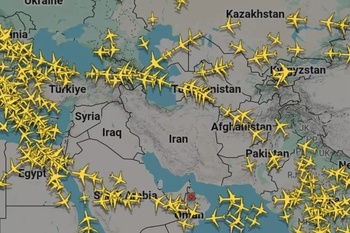 If the war takes on more serious dimensions and if it spreads across the wider region and lasts longer than its architects planned it could well trigger a popular revolution in Bahrain, a miniature Arab Gulf monarchy in which Shiite Muslims make up over 70 percent of the population and which is ruled by a minority Sunni Khalifa monarchy. There could be an uprising in Jordan, as well as a potential war between Iraq and Syria. There could also be a regime collapse in the UAE in the form of an intra-family coup. Even the openly pro-western Arab states, while they may desire a weakened Iran do not openly advocate the overthrow of the Iranian Islamic order, because in that case Israel would become the implacable regional hegemon which is not in the Arabs’ interest. In any case, the responsibility for the attack on Iran lies with Trump and the hawks in the American political establishment who are under the influence of Israeli Prime Minister Netanyahu who puts the interests of Israel first, not the American citizens. Even a good part of Trump’s MAGA base was against this war, especially if it lasted longer than the American citizens can tolerate and bear. Their reaction will depend on the nature of Iranian retaliation, which for now has been proportionate and restrained.
Iran has never been a threat to America and the American people nor is it a threat to American security. These are fabrications spread by the American media in conjunction with Zionist interests. Trump’s Zionist base whose exponents are warmongers, Senators Lindsey Graham and Ted Cruz, evangelical Christians who favor Zionist interests and the genocidal regime in Israel, advocate the overthrow of the Islamic Republic. Although Iran is not an existential threat to Israel which has nuclear weapons that international authorities have never questioned, Iran is a strategic threat to Israeli hegemony in the Middle East. A new aggression against Iran will be billed to the so-called peacemaker Trump, whether it is an American triumph or defeat. In a year of congressional elections and the decline of Trump’s popularity and the danger that Republicans may lose control not only of the US Congress but also of the Senate, the latest war against Iran could either strengthen or destroy Trump’s presidency. That will depend on the length and outcome of the war.
Donald Trump is not the main architect of the war against Iran but he is its executioner and he could have prevented it. This is a decades-long American imperial strategy to overthrow the Islamic Republic that is being implemented in stages. It is currently entering its final, most dangerous and most uncertain phase. Iran is the most significant strategic figure on the regional chessboard of West Asia. Iran is important to all players in the global game for primacy between the great powers, America, China and Russia. The Americans, who want to preserve global supremacy cannot achieve this without political control of Tehran. Iran lies on vast energy resources of oil and gas and is an unavoidable route at the crossroads of trade corridors between Asia and Europe. American encirclement of China is impossible to achieve without mastering Mackinder’s Eurasian heartland. Iran is an unavoidable part of that heartland. The Brookings Institution, which is considered the shadow government when it comes to formulating American global strategy, published a comprehensive and important document in 2009 entitled “Which Path to Persia”. A document signed by a group of American experts on Iran (among them was Martin Indyk, the leading American Middle East strategist in several administrations, a kind of Kissinger version, close to the Democratic Party (who died a few years ago) explained in detail various American scenarios for regime change (the overthrow of the Islamic Republic). One chapter suggests that the initiative should be left to Bibi (Leave it to Bibi), the Israeli prime minister.
Trump, who made promises to the American citizens, especially his MAGA loyalist base, that he would not drag America into a new and long-lasting war (forever wars), did not have the strength to oppose Zionist donors and the American neoconservative establishment against which he claimed to be waging his own war. The timing of the publication of Epstein’s correspondence with corrupt global oligarchs whom some call the Epstein class in the West, was obviously a kind of blackmail and additional pressure on Trump not to give up the temptation of attacking Iran.
 Osman Softić is a Publicist, geopolitical analyst and theologian. He researches international relations, the Middle East and Islamic movements. He is a research fellow at the Islamic Renaissance Front (IRF) in Kuala Lumpur. He graduated from the Faculty of Islamic Sciences in Sarajevo and received a master’s degree in international relations from UNSW University in Australia. He is the author of the book Geopolitics of the Muslim World in the Era of Islamophobia. He has published a number of essays in academic journals and numerous works, commentaries and analyses in the field of geopolitics and international relations in Bosnian and English.