Fadlullah Wilmot || 25 March 2026
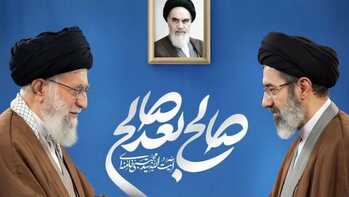 As the world marks three weeks of war that began with the assassination of Iran’s Supreme Leader Ayatollah Ali Khamenei, it inevitably recalls another assassination in 1914: the killing of Archduke Franz Ferdinand, which helped spark World War I by unleashing forces no one could fully control.
Western leaders have rushed to back this war of aggression, shredding what remains of the UN Charter and confirming that international law is treated as an instrument of imperial policy rather than a universal constraint. Far from a marginal conflict, the campaign threatens to engulf the Middle East, accelerate the collapse of the already tattered “rules‑based order”, and reshape global geopolitics in ways that reward powerful states while imperilling smaller and middle powers. At the same time, Iran’s resistance is also exposing the limits of imperial rule. Iran is no Venezuela, where the United States could leave a formal government structure in place while effectively controlling policy—much as the British once relied on compliant local rulers to enable their exploitation and control.
For much of the world, the stakes are not abstract. Endorsing or failing to condemn this war further erodes the international legal framework that weaker states attempted to use to protect their interests, admittedly often unsuccessfully in the light of US power. In contrast, principled stances by some Global South governments, including Malaysia’s consistent opposition to aggression and genocide, show that another path remains possible.
An illegal war of aggression
Under the UN Charter, the use of force is lawful only in self‑defence against an actual or imminent armed attack, or when authorised by the UN Security Council. Just like Israel’s attacks on Lebanon, Syria, the West Bank and Gaza, the US–Israeli assault on Iran meets neither condition. There was no Iranian strike on US or Israeli territory that could plausibly justify such military action. The scale is shocking with mass bombing across dozens of provinces, decapitation strikes against senior leaders, and attacks on core infrastructure including energy, transport, and command‑and‑control systems, as well as heritage sites, health facilities and schools. At the same time, Israel is repeating the destruction it wreaked on Gaza in Lebanon.
International law scholars have been unequivocal: the strikes on Iran are neither “pre‑emptive” nor lawful defensive actions. As Professor Ben Saul and others argue, they amount to “illegal armed attacks” and the international crime of aggression, with no “conceivable argument” that they represent self‑defence. Subsequent assessments as the war has unfolded have only hardened this view, describing the campaign as a textbook violation of the UN Charter that has “blown up international law” and pushed the legal order toward free‑fall. More bluntly, the US–Israeli campaign is another “assault on the United Nations itself,” launched without Security Council authorisation and in open contempt for the Charter’s core prohibition on aggressive war. In place of genuine multilateralism, Washington is now trying to construct ad hoc coalitions and “peace boards” that function as rivals to the UN system, further undermining the only forum where weaker states have even a theoretical voice.
The legal fig leaf looks even thinner against recent diplomatic history. Western powers negotiated a robust nuclear agreement that imposed intrusive inspections on Iran’s nuclear program, only for that agreement to be unilaterally dismantled and then left in ruins. Destroying the diplomatic mechanism and then claiming bombing is the only solution to a speculative nuclear threat is a textbook inversion of law and reason.
The operation is far from a limited “surgical strike.” Its stated aims slide between degrading Iran’s defences, decapitating its leadership, crippling its economy, and, in practice, pursuing regime change. On any honest reading of the Charter, this is an illegal war of aggression.
The war’s coercive logic has become even clearer with US President Donald Trump issuing a 48‑hour ultimatum, threatening to “obliterate” Iran’s power plants “starting with the biggest one first” if Tehran does not fully reopen the Strait of Hormuz to shipping. Tying the survival of an entire country’s civilian power grid to US demands over a strategic chokepoint is not self‑defence; it is energy blackmail, and it further underlines how far this campaign departs from the narrow conditions that the UN Charter permits. Iran has responded by warning that any such strike would trigger attacks on US‑linked energy and desalination infrastructure across the Gulf, explicitly naming targets in states that host American bases or rely on US security guarantees pressure that forced Trump to backtrack, at least for now.
Permanent war, “Greater Israel,” and a region set on fire
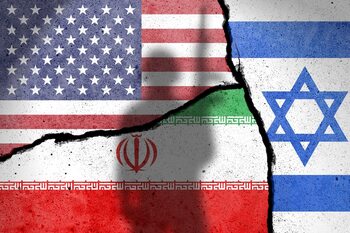 If the war cannot be justified legally, its logic must be political. Analysts such as Yanis Varoufakis describe Israel’s strategy as a doctrine of permanent war: a regional approach that pairs repeated military campaigns with demographic and economic reordering, not a genuine search for peace. In this vision, a “Greater Israel” dominates from the river to the sea and projects power beyond, while any independent centre in the region is either tamed or destroyed.
Over recent years, and especially since the Gaza genocide, Israel, backed by the US, has used overwhelming military power to strike Gaza, Syria, Lebanon, Iraq, Yemen, and now Iran. Iran’s centrality stems from one core fact: it remains the only state that consistently provides material, diplomatic, and moral support for the Palestinian cause even as many Arab governments normalise relations with Israel and avert their eyes from ongoing ethnic cleansing. For Israeli strategists, any independent regional pole that insists on Palestinian rights and refuses subordination to a US–Israeli security architecture must be broken, contained, or destroyed; that is the real “crime” for which Iran is being punished.
Domestically, Israel has been swept by “gung‑ho militarism,” with widespread indoctrination framing Iran as the “ultimate evil” and justifying whatever escalation is deemed necessary to secure strategic dominance. As the war has unfolded, leading officials have begun to say the quiet part out loud. Prime Minister Benjamin Netanyahu now boasts that “Iran is being decimated” and claims that the war has created “the optimal conditions for toppling the regime,” insisting that there “must be a ground component” if real change inside Iran is to be achieved. At the same time, US planners have drawn up scenarios for deploying troops and Trump has publicly listed war aims that go far beyond any plausible defensive necessity: “completely degrading” Iran’s missile forces, destroying its defence industrial base, and eliminating its navy and air force. These are not the objectives of a limited response; they are the objectives of a long‑term regime‑change and state‑crippling project.
Crucially, this project does not require regional stability; on the contrary, it feeds on instability. The Greater Israel ambition can not only coexist with but can even benefit from a West Asia that “goes up in flames”, so long as Israel emerges as the only cohesive, nuclear‑armed power tied directly into US military and technological networks. Whether Gulf monarchies are dragged into a disastrous war with Iran or not is, from this Israeli perspective, a secondary consideration. Their vulnerability, dependence, and potential fragmentation only reinforce Israel’s relative position; the more the Gulf is destabilised, the more indispensable Israel becomes to Washington—and to nervous Arab regimes seeking protection.
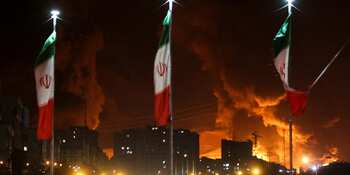
What was once a feared scenario is now perilously close to reality: missile exchanges across multiple fronts, strikes and threats against oil and gas facilities, and open talk of power‑grid warfare have turned the Gulf into a tinderbox where a single miscalculation could plunge the entire region into systemic crisis. A shattered Iran, weakened Gulf states, disrupted shipping routes, and soaring energy prices all risk catastrophic human and economic costs for millions but they also deepen dependence on Western security structures in which Israel is the indispensable partner.
None of this means approval of Iran’s own domestic or international policies, some which rightly raise serious moral concerns. But such realities do not alter the legal character of the current war. International law does not permit powerful states to bomb a sovereign nation because they dislike its alliances, domestic order, or regional behaviour. To treat Iran’s domestic or international policies as retroactive justification for an unprovoked assault is to abandon law altogether and embrace a politics in which “Greater Israel” and US hegemony are the final arbiters of who may live in peace.
It is therefore no surprise that Iranian officials describe negotiations with Washington in terms of betrayal rather than trust. As former chief nuclear negotiator and foreign minister Abbas Araghchi put it with bitter clarity: “We don’t see any reason why we should negotiate with the United States. Twice we negotiated with them and both times they attacked us “in the middle of negotiations.” That experience is not merely an Iranian grievance; it is a warning to the entire region that in the emerging order of permanent war and imperial energy blackmail, law and agreements are fragile, while bombs and blockades are all too real.
Western confusion and complicity
Reactions across Western capitals reveal a pattern of moral confusion wrapped in political calculation. In the United Kingdom, Prime Minister Keir Starmer initially stressed that Britain would “not join offensive strikes against Iran,” seeking to carve out a distinct position while still affirming support for Washington and Tel Aviv. Yet his government has now allowed use of British bases and continued to offer diplomatic backing, intelligence sharing, and logistical support, even as it insists that the UK “will not be drawn into a wider war.”
This posture of refusing direct participation in bombing while quietly enabling it, has become typical. EU leaders have ruled out sending warships or joining US strikes but have largely echoed Washington’s framing of the conflict and declined to condemn the campaign’s legality. As commentators in Europe note, such half‑measures reveal not principled restraint but fear: on the one hand, fear of domestic backlash if European forces are seen as launching another Middle Eastern war, and on the other fear of Washington’s displeasure if they take a truly independent stand.
Even in the United States, cracks are emerging. Polls and reportage suggest that segments of Trump’s own base are uneasy about the costs, casualties, and risks of escalation, with growing support for ending the war quickly rather than sliding into a protracted ground campaign. Yet the bipartisan foreign‑policy establishment remains largely committed to a narrative of deterrence and “order,” even as that narrative is belied by the facts on the ground.
Fragmentation, deception, and Gulf faultlines
 The war is also intensifying long‑running strategies of fragmentation and covert manipulation. Historical false‑flag operations such as the 1954 Lavon Affair in Egypt and the Lillehammer affair in Norway show how Israeli intelligence has used covert violence to steer regional narratives and entangle other states in its conflicts. Today, amid competing claims over attacks on ships and infrastructure, regional media and analysts warn that similar tactics could be used to drag Gulf states deeper into confrontation with Iran, whether through misattributed strikes or information warfare.
Sami Hamdi and others have highlighted how external powers, both the Gulf states and Western governments, routinely instrumentalise ethnic and sectarian minorities, from Kurds to the Baloch, turning them into proxy forces that risk the long‑term fragmentation of states. In Libya and Sudan, such strategies have contributed to the breakup of central authority and prolonged civil conflict. Applied to Iran, similar tactics could turn a multi‑ethnic state into a patchwork of warring entities, serving external interests while devastating local populations. This does not mean that minorities in Iran and other countries do not have valid grievances; it does mean that fragmentation primarily benefits external powers. It transforms relatively cohesive, multi‑ethnic states into permanent battlegrounds for regional and global competition, creating zones of endless conflict where law is replaced by militia rule. For those pursuing a Greater Israel and a US‑centred order, such outcomes are tragic but useful. Israel would prefer a dismembered Iran—along the lines of Sudan, Somalia, Syria, Iraq or Libya—one that can no longer even nominally, let alone effectively, support Palestinian resistance or challenge regional hierarchies.
A war that breaks the region – and the “rules‑based order”
The human consequences are already severe. Iranian civilians are dying as strikes hit infrastructure and urban centres; provinces far from any front line now live under the constant threat of bombardment. Multi‑front escalation could ignite conflict across the Middle East, disrupt shipping through the Strait of Hormuz, and raise global energy prices, burdening the poorest countries most heavily.
Regionally, Gulf monarchies are balancing their dependence on the US and Israel against fear of Iranian retaliation. Their populations often rage against yet another Western‑backed war, but their governments are trapped in a web of strategic calculation. Meanwhile, institutions imagined as bulwarks against unilateral power like BRICS and the OIC of which Iran is a member have so far proved unable to mount a coherent response, despite Iran’s membership, underlining how fragile the fantasy of automatic “multipolar” protection really is.
Globally, the message is stark: the “rules‑based order” has become whatever Tel Aviv and Washington and its closest allies decide. When enemies face trial under international law, it is invoked; when friends launch wars of aggression, the law is reinterpreted or ignored. The war on Iran will permanently alter the global economic and geopolitical landscape, from energy markets to the authority of the UN system itself. This entrenched double standard encourages other powers to follow suit, undermining the very architecture meant to prevent a return to a world where brute force, not shared rules, determines which nations live or die.
A path forward: law, sovereignty, and dignity
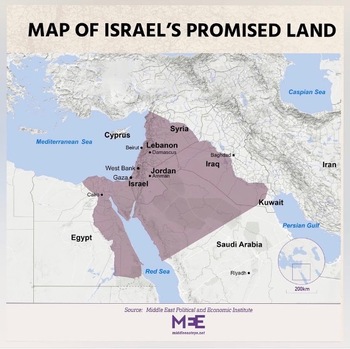 Stopping this descent into de facto submission to Greater Israel and American imperialism requires courage, principle, and global solidarity. The bombing must cease, Iranian sovereignty must be restored, and military force must return to the narrow exceptions permitted under the UN Charter.
At the international level, states and civil societies must insist that the UN system not be treated as a corpse. Emergency General Assembly resolutions, universal‑jurisdiction cases, and other legal mechanisms can and should be used to contest impunity. Governments that uphold legal norms are not only protecting distant victims but in fact their own citizens; those that abandon them signal that international law is negotiable whenever powerful friends demand it.
Politically, a new divide is emerging between those willing to sanction perpetual wars and those who refuse. Governments of small countries like Malaysia show that it is still possible to voice legal and moral opposition to aggression and genocide, demonstrating that principled stances are possible even under pressure. However, the OIC and Arab states have dismally failed to condemn the attacks on Iran. Public mobilisations worldwide, from North America to Southeast Asia, show that there is a growing refusal to accept a system where powerful states rewrite the rules to suit themselves.
While the suffering of Muslims in the DRC, India, Myanmar and East Turkistan (Xinjiang) continues unabated Iran is being attacked with hints from senior figures in Israel that Turkey may be next. The choice before global leaders is stark: uphold what is left of international law and human dignity or embrace the Israel-American empire, where force, not justice, determines who lives and who dies. The suffering of ordinary Iranians, Palestinians, and civilians across the Gulf and in Lebanon, Syria, Yemen, Sudan, and Somalia is not “collateral damage;” it is a warning to the world of what unrestrained unipolar power truly looks like.
 Haji Fadlullah Wilmot is a member of the Board of Directors of the Islamic Renaissance Front. He formerly served at universities in Indonesia, Malaysia and Australia but after the tsunami in Aceh became involved in the humanitarian and development sector. He has worked in Indonesia, the Philippines, Malaysia, Cambodia, Vietnam, Solomon Islands, Bangladesh, Pakistan, Jordan, Lebanon, Kenya, Sudan, Somalia, Afghanistan and Iraq. As a volunteer with the Australian Muslim Advocacy Network he is now monitoring anti Muslim hate speech in the electronic as well as social media that is exploding in response to right wing posts about what is happening in Gaza and also works with organisations supporting Muslim converts.