
Ahmad Farouk Musa || 19 August 2025
Madam Chairperson, YABhg Tun Dr Mahathir bin Mohamad, former Prime Minister of Malaysia; Datuk Seri Meer Sadik, Group Executive Chairman of Habib Jewels; my friend Dr Azhar Ibrahim, Datuk-Datuk, Professors and Doctors, ladies and gentlemen.
Assalamu’alaikum wa-rahmatullãh
 I start my speech today by saying that there are hardly enough words to describe this extraordinary man, Muhammad Asad. Born Leopold Weiss in Lwów, then part of the Austro-Hungarian Empire, Muhammad Asad (1900–1992) was a prominent 20th-century Islamic thinker, writer and diplomat. Raised in a Jewish family, he initially pursued a career in journalism and became a correspondent in the Middle East during the 1920s. His encounters with Arab society and the teachings of Islam deeply influenced him, eventually leading to his conversion to Islam in 1926.
But who was responsible for shaping his thinking at that time? It was his friendship with Mustafa Marãghi, an Islamic scholar in Syria and author of Tafsir al-Marãghi, a tafseer of the Qur’ān, who introduced him to the thoughts of an Egyptian reformist scholar: Muhammad Abduh.
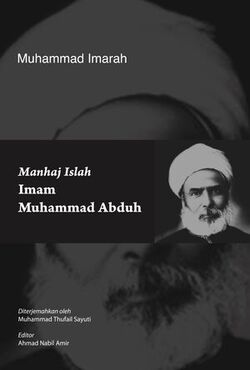 Let me point out here that Abduh died in 1905, so Asad never met Abduh. Nonetheless, Abduh had a profound influence on Asad’s thought.
Asad often cites Abduh in his commentary on the Qur’ān, acknowledging him as one of the modern voices who sought to reconcile Islamic teachings with reason, ethics and the conditions of the modern world. For Asad, Abduh represents a rationalist and reformist approach to Islam—one that emphasized that the Qur’ān must be read in light of its moral and universal principles, rather than through narrow legalism or uncritical traditionalism.
Asad openly acknowledges his indebtedness to Abduh’s reformist perspective. In his magnum opus The Message of the Qur’ān, he states:
“The reader will find in my explanatory notes frequent references to views held by Muhammad Abduh (1849–1905). His importance in the context of the modern world of Islam can never be sufficiently stressed. It may be stated without exaggeration that every single trend in contemporary Islamic thought can be traced back to the influence, direct or indirect, of this most outstanding of all modern Islamic thinkers.”
This passage highlights how deeply Abduh’s thought influenced Asad’s interpretative framework—particularly the emphasis on rational, ethical and modernist understandings of the Qurʾān. But, it is worth noting that The Message was written much later in Asad’s life. So what truly drew Asad to Islam? His turn towards Islam occurred after his journey to the Middle East and his acquaintance with Marãghi, which prompted him to study the Qur’ān more deeply.
 Before this, it was in the Damascus mosque that Asad had his first epiphany. This moment is beautifully recounted in his book The Road to Mecca, translated by the Islamic Renaissance Front as Jalan ke Mekah, when he discovered the true meaning of “Islam” or surrender in a lived experience.
Asad describes sitting in the courtyard of the Umayyad Mosque in Damascus, watching ordinary people come and go—men and women, merchants, peasants, scholars and beggars. Some came to pray, some to rest, some just to pass through.
He reflects on a moment that struck him:
“They would rise, wash, and stand in rows; then bow and prostrate themselves upon the ground in that solemn rhythm which is Islam’s prayer. And as I watched them, a thought took hold of me with overwhelming force: these people live in the presence of God. Their whole life, with all its faults and failings, is penetrated by the certainty of God’s nearness.”
He then shares his realization:
“It flashed upon me that the essence of their faith was simple, direct: not a creed to be accepted, nor a theology to be argued—but a state of being, a surrender of man’s whole existence to God. This was Islam.”
He concludes this scene with his own awakening:
“At that moment I knew that I too had become a Muslim, though I had not yet pronounced the words of the profession of faith.”
However, he was not yet a Muslim. The moment in the Damascus mosque was not his formal conversion, which occurred later in Berlin in 1926. But it was an epiphany; the moment he grasped Islam not just as an idea, but as a lived reality.
Indeed, the Berlin subway epiphany became the decisive turning point in Muhammad Asad’s conversion story. While the Damascus mosque imparted the feeling of Islam, the Berlin subway incident gave him conviction.
A few years later, Asad was travelling on the U-Bahn (subway) in Berlin. He noticed the faces of the passengers around him—tired, strained, anxious. Most were neatly dressed, but their expressions struck him.
He wrote in The Road to Mecca:
“All of them looked worried, pale, and harassed. And suddenly it occurred to me that they all shared a common anxiety: the insecurity of a life cut off from meaning. They were slaves of a system that promised them happiness but could never give it.”
In that moment, he contrasted what he was seeing in Berlin with the simplicity of life he had observed in Muslim lands: people who, despite poverty and hardship, seemed anchored by faith.
Then came the epiphany:
“I saw that all our European endeavours, our whole civilization, were but a faltering attempt to escape from the emptiness that had overtaken us. And I understood that Islam, with its clear pattern of life, had already solved the problem which Europe was trying in vain to solve.”
That subway ride instilled in Asad a sense of urgency; he could no longer live within the confines of European secular modernity. In that underground train, he contrasted the weary faces around him with the serene dignity he had observed among poor villagers in the East. He came to understand that Europe’s problem was not poverty of material goods but poverty of meaning. Islam, with its simple pattern of faith and life, offered what modern civilization could not: harmony between man, God and the world.
This marked the second epiphany: the recognition that he could not return to a purely Western outlook. The final step came as he read the Qur’ān itself.
One short passage struck him like a thunderbolt. Asad said that after the train ride, he retreated to his room and saw an open page of the Qur’ān he had been reading:
أَلۡهَٮٰكُمُ ٱلتَّكَاثُرُ (١) حَتَّىٰ زُرۡتُمُ ٱلۡمَقَابِرَ (٢)
“You are obsessed by greed for more and more, until you go down to your graves.”
(Sura at-Takãthur; 102:1–2)
He felt as if the words had leapt across fourteen centuries to precisely capture the sickness of modern society—the relentless pursuit of wealth and possessions, the emptiness of consumer culture, and the inevitability of death that looms over it all.
“Never before,” Asad wrote, “had I seen words that described so forcefully the spiritual crisis of our age. I knew beyond doubt that this could not have been the work of a man. This was God’s Word.”
This realization brought together the insights from Damascus and Berlin to full bloom.
In 1926, in Berlin, Leopold Weiss formally embraced Islam, taking the name Muhammad Asad. For him, it was not a leap into the unknown but a homecoming:
“I knew now, with utter certainty, that I had reached home. My wandering was over, my heart at rest. I had found Islam.”
Together, these three pivotal moments—the Damascus mosque (the glimpse), the Berlin subway (the contrast), and the Qur’ānic verse (the certainty)—formed the arc of his conversion: from intuition to recognition to conviction.
He later wrote:
“The moment I saw the faces of my fellow passengers in the subway, I knew with certainty that I had to become a Muslim. Their despair was my own—and Islam was the way out.”
Now, some may ask, as Datuk Seri Meer Sadiq asked me yesterday: what brought me personally to Muhammad Asad?
Those who knew me in my younger years would not be surprised to learn that I used to subscribe to Islamism. That is, I believed that the Qur’ān had laid everything in life for us to follow, and that establishing a kingdom of God on earth, or Dãrul Islam—an Islamic State—would resolve all our problems.
However, after studying the Qur’ān in its entirety, including its translation, I realized that the Qur’ān did not specify how we should administer a state or government. I became disillusioned. I started searching for answers, particularly for concepts in the Qur’ān that conflicted with my scientific mind. As a man of science, everything must be rational for me.
 One day, during my time with the current Mufti of Perlis, who was then a lecturer at Universiti Sains Malaysia, I stumbled upon the most important interpretation of God’s word. It was a book that I was reading, Islam at the Crossroads, by none other than Muhammad Asad.
In the chapter About Education, Asad emphasized that the Qur’ān is full of exhortations to learn “so that you may become wise”, “that you may think”, and “that you may know”.
Asad also highlighted the importance of “reason” in his commentary of the verse:
“and He imparted unto Adam the names of all things”.
[Sura al-Baqara; 2: 31]
According to philologists, the Arabic term “ism” (name) in this verse implies an expression “conveying the knowledge (of a thing). Asad interprets it philosophically as a “concept”.
Subsequent verses indicate that, due to this God-given knowledge of “names” or conceptual thinking, man is, in some respects, superior to angels.
The “names’ are a symbolic expression of our ability to define terms and articulate thoughts, a unique human trait that enables us, in the words of the Qur’ān, to be God’s vicegerent (khalifah) on earth.
This articulation in Islam at the Crossroads had a profound impact on my mind and my soul. It answered a question that had long troubled me: what was it that was so special about a mortal being, with our temptations and freedom to committing sins, that makes us superior to the ever-obedient angels?
 This newfound enlightenment drove me to explore The Message of the Qur’ān. It answered many pressing questions that troubled my scientific mind, especially concerning predestination, the doctrine of abrogation (an-nasikh wal–mansukh), and whether the Qur’ān is time-bound or timeless. It also helped reconcile seemingly contradictory verses of the Qur’ān with modern science and other pertinent issues. Throughout the pages of The Message of the Qur’ān, I found answers that alleviated my concerns.
That was how I discovered Asad, and through him, I learned about the influential figure Muhammad Abduh. The most precious knowledge I gained was the reformist legacy of Muhammad Abduh, which became clearer as I read The Message. Today, many Muslims grapple with the challenge of reconciling faith and modernity.
A century ago, Muhammad Abduh argued that certain aspects of religion, especially those related to ‘ibada (worship) and aqeeda (creed), would remain immutable. These are known as ath-thawabit (the immutable). In contrast, issues of governance should be addressed through human reason, as they fall within the realm of al-mutaghaiyyirat (the changing), which requires human agency to solve.
Abduh’s reformist agenda and rationalism emphasized reason (‘aql) and God’s justice (‘adl), suggesting a foundation for a dynamic Islamic theology, capable of addressing the challenges of modernity.
With this understanding, Asad transformed my perspective from that of an Islamist to a rationalist. This is how I discovered the remarkable man, Muhammad Asad.
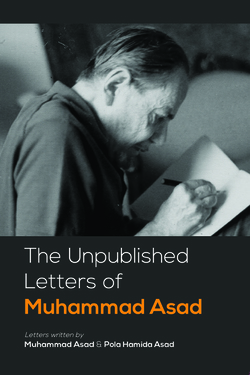 I hope my introduction to Muhammad Asad inspires you to explore the first ever compilation of his personal letters to friends. These letters reveal Asad’s personal struggles, including his exasperation, pain, hope and despair. I also encourage you to read his other works, particularly those I mentioned, and not to overlook his most important contribution, widely regarded as the best English translation of the Qur’ān, The Message of the Qur’ān.
With that, I thank you.
Wassalamu ‘alaikum warahmatullāh
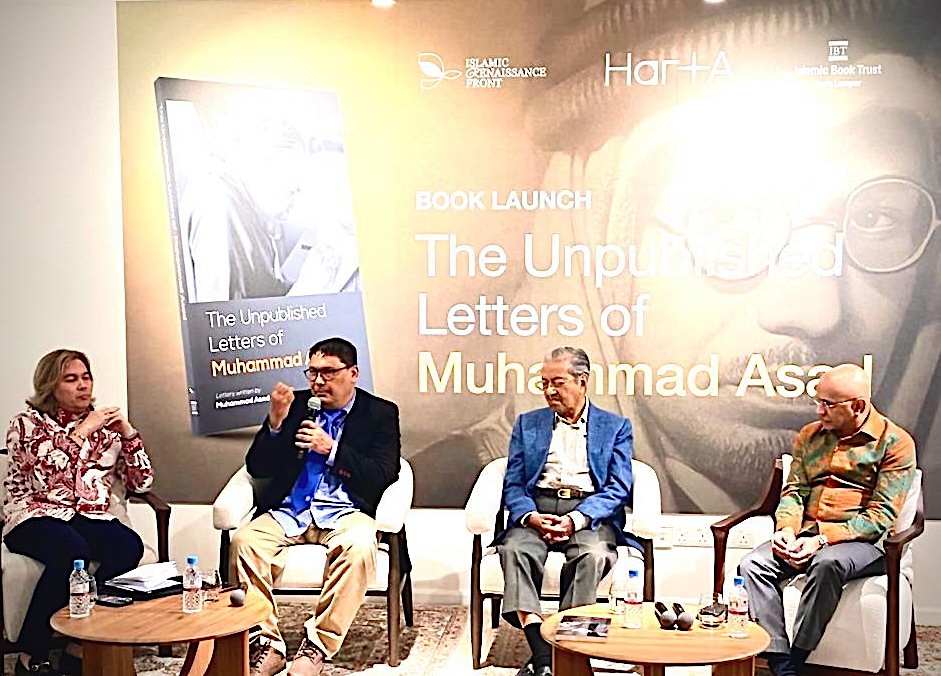
 Dato’ Dr Ahmad Farouk Musa is a scholar, researcher, and social activist. He is the Founder and Director of the Islamic Renaissance Front. He holds a PhD in Surgery from Monash University Australia and Masters of Medicine in Surgery from Universiti Sains Malaysia. He is also a doctoral candidate in Islamic Studies at Universiti Muhammadiyah Malaysia and a Research Fellow at Sekolah Tinggi Filsafat Islam (STFI) Sadra (Islamic Philosophy College), Jakarta, Indonesia.