
Geopolitical Paradigm Shift in South Asia
Osman Softić || 23 October 2025
 Border clashes along the Durand Line that separates Afghanistan from Pakistan erupted occasionally ever since the Taliban returned to power in Kabul after the abrupt US withdrawal in 2021. US forces invaded and occupied but never completely conquered Afghanistan despite two decades-long occupation.
The latest Pakistani airstrikes on Kabul and other provinces and the exchange of fire power along the border threaten a full-scale war, unless a temporary ceasefire Saudi Arabia and Qatar helped initiate holds long enough for a diplomatic solution to be reached. What appears to be serious geopolitical conflict rather than simple skirmish prompted Imran Khan, former prime minister of Pakistan to offer himself as mediator to help resolve the dispute. Khan is serving his prison sentence on what human rights organizations and his supporters believe were politically fabricated charges after he had been deposed from power. Imran Khan, an ethnic Pashtun, asked to be released from prison on parole and in return promised to reconcile the two countries.
Khan was ousted from power after his Pakistan Tehreek-e-Insaf (PTI) movement for justice-led government was voted out of power on 10 April 2022 in a no-confidence motion by the parliament. His ouster, however, is widely believed to have been a soft coup carried out at the behest of Washington. American purported demand to remove him was eagerly welcomed by the generals who ruled from the shadows using parliament, civilian government and judiciary as cover and an illusion of democracy.
The Cause of Conflict
The war that erupted along the Pakistan-Afghanistan border can no longer be interpreted solely as a military confrontation between a legitimate Pakistani security force and an insurgent Pashtun group, Tahreek Taliban Pakistan (TTP) as is claimed all along. The real cause of conflict may be Islamabad’s inability to permanently maintain the illusion that Islamabad can, as it had done for decades, perpetually control the levers of power in Kabul and, whenever the generals in Rawalpindi and their political appointees in Islamabad so decide, manipulate the one-time compliant Taliban to do their bidding, almost by remote control.
Ethnic Pashtuns make up 40 percent of Afghanistan’s population. Half of them live in Pakistan where they constitute the majority in northeastern province of Khyber Pakhtunkhwa (KP), from whose ranks TTP militants are recruited. Pakistani Taliban have been fighting against the Pakistani state for greater regional autonomy and an Islamic political order in their province. This latest conflict proves that the previous geopolitical paradigm had failed. This past hegemonic relationship implied that Pakistan whenever it saw fit exercised political control in Kabul by using Taliban as its proxy in the interests of Islamabad.
Afghanistan had been Pakistan’s strategic depth in its conflict with India for decades. Pakistan’s territory is a narrow and it is at disadvantage compared to India, its larger neighbor and bitter enemy, therefore it always needed to maintain strategic depth in Afghanistan. Pakistan in the past managed political processes in Kabul by proxy (except the period of Northern alliance government which kept Taliban at bay during the occupation). Taliban from the Pashtun ranks were systematically indoctrinated in militant Pakistani madrasas during the “Afghan jihad” against the Soviets in the 1980s, to implement Pakistan’s political agenda, ostensibly in the name of common Islamic identity rather than in the interest of Afghanistan.
This paradigm, designed to serve the interests of Pakistan, is no longer viable in an increasingly independent Kabul despite the fact that Taliban is back in power in Afghanistan. Therefore, the latest military showdown indicated the collapse of the previous Pakistani strategy based on the illusion that Kabul can be controlled indefinitely. In other words, Pakistani “jihad” against its enemies can no longer be managed and manipulated by using the same template which was effective during the past decades. Alliances in South Asia are no longer predictable in a way they used to be. This is not just a matter of border clashes. Rather, it is a sign of the collapse of previous geopolitical order.
The New Geopolitics
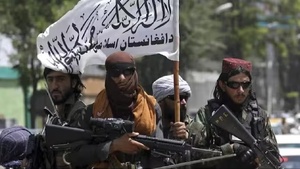 Completely new geopolitics of South Asia is on the horizon. The Pakistani authorities are not having much success in their military confrontation with TTP militants. This militant Taliban, Pashtun-based group has carried out a series of deadly attacks inside Pakistani territory over the past few years. Islamabad accuses the Afghan Taliban in Kabul of providing them with protection and sanctuary in Afghanistan, but they deny the accusations.
Border between Pakistan and Afghanistan are a former colonial line demarcating the spheres of British influence between India and Afghanistan dating back to the 19th century. Pakistan did not even exist as a country at that time. The 2,600 km Durand Line was drawn by Sir Henry Mortimer Durand, foreign secretary of colonial Britain to demarcate the spheres of influence in a treaty with Abdur Rhman Khan, the Emir of Afghanistan in 1893.
The Durand Line divided the Pashtuns in two halves and they now live in two countries. The tribal groups are accustomed to moving freely on both sides of the border. The current Taliban government in Kabul does not recognize the Durand Line as the official state border between the two countries. This has been a cause of major friction between the two Muslim neighbors. Furthermore, Islamabad demanded that the Taliban government deal with the TTP, claiming that Kabul has systematically avoided doing so, which has frustrated Islamabad.
The Strained Relationship
Pakistan’s army chief Field Marshal Asim Munir has identified the TTP’s presence in Afghanistan and its frequent cross-border attacks as the main cause of strained bilateral relations between the two countries. Pakistan’s defense minister Khawaja Asif has announced that Pakistan may launch cross-border anti-terrorist military operations in Afghanistan if Kabul continues, as he put it, to “hide terrorists.” Pakistan has carried out similar attacks inside Afghanistan before. Pakistani airstrikes on targets in Kabul and several other provinces were interpreted in Kabul as an outright aggression by Pakistan.
Afghanistan’s Taliban forces responded with fire on the Pakistani border on October 12 killing 58 soldiers. Pakistan claims to have eliminated at least 200 Taliban fighters and captured several border security posts. It is the deadliest fighting between the two countries to date. Islamabad expected the Taliban government in Kabul, once it came to power, to rein in the TTP. Contrary to expectations, this has not happened. The Taliban in Kabul treat their Pakistani ideological and ethnic Pashtun brothers as “mujahideen” and have been reluctant to attack them.
Pakistan’s primary strategic goal, regardless of who has been in power, has always been to have a friendly government in Kabul. This strategy has failed. India’s strategy is identical. Control or influence in Kabul is essential for India’s security. This was confirmed by Tilak Devasher, one of India’s foremost geopolitical and strategic experts for the region who has written extensively on the history of Pashtuns as well as on strategy and politics of Pakistan. The Pakistani military-backed regime is further frustrated by the improving relations between the Taliban government in Kabul and India.
India supported the anti-Taliban and pro-American regime in Kabul for 20 years during the American-led occupation of Afghanistan. New Delhi developed a serious diplomatic and economic presence in Kabul. After the withdrawal of Americans India also left Afghanistan but quickly returned and established good relations with the Taliban government, although it has not yet officially recognized it. Pakistan had the illusion that it would be privileged in Kabul and would once again be able to manipulate the Taliban in order to achieve its national and strategic interests. However, after consolidating power, the Taliban government showed serious opposition to Islamabad’s expectations. In addition, the Taliban also possess a respectable military arsenal that was left behind by the Americans.
The Indian Factor
Over the past year, Taliban officials in Kabul met with Indian diplomats on several occasions. Only a few days ago, Afghan Foreign Minister Amir Khan Muttaqi paid his first official visit to New Delhi. India plans to take diplomatic relations with Kabul to the next level. India considers Afghanistan an important regional partner. In addition, India is working hard to restore and improve trade ties with Kabul.
At the center of New Delhi’s trade strategy will be the Iranian port of Chabahar, through which trade from India to Afghanistan and Central Asian countries will take place. This means that India has an alternative and can bypass Pakistan. Moreover, Pakistan often blackmailed landlocked Afghanistan by having all of Afghanistan’s trade with the rest of the world take place through the Pakistani port of Karachi. Therefore, the Taliban government’s increasingly good relations with India may offer Kabul a huge strategic advantage over Pakistan. This means that Pakistan will no longer be able to blackmail Kabul, which, thanks to its good relations with India, will also have access to the Iranian port of Chabahar. This port, in which India invested significant funds, is exempt from the US sanctions regime and is a key hub in the south of the International North-South Corridor (INSTC) that stretches from Moscow via Iran to the Persian Gulf and India.
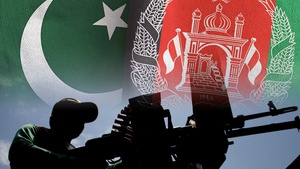 In the absence of diplomatic relations with Kabul, India has its own “technical mission” in Afghanistan. Embassies in Kabul and New Delhi too could soon be opened. Kabul is faced with serious challenges though. Western countries are reluctant to recognize the Taliban government and the economic situation is dire. Russia is the only country to have formally recognized the Taliban government to date. Afghanistan is once again emerging as a site of geopolitical and economic ambitions of great powers (new great game), especially China and Russia. Iran and Turkey too have their own interests in Afghanistan. Apparently, Ankara is running the Kabul international airport via a UAE-based company, while Pakistan is trying to maintain strategic depth it had in Afghanistan, especially during the cold war period when Pakistan’s military intelligence service (ISI) was used by CIA as a major conduit to funnel Saudi funds to at least seven mujahideen factions in Afghanistan, according to Ahmed Rashid, one of Pakistan’s foremost experts on Taliban.
Less than 4 years after pulling out of Afghanistan completely, the United States is showing a renewed interest to revive some of its assets in Afghanistan. Donald Trump hopes to be able to return American troops to the Bagram air base. Pakistan is hoping to help the Americans achieve this goal by capitalizing on its former ties and influence with the Taliban. Islamabad also tries to lure them into strategic relations with China in order to integrate Afghanistan into China’s Belt and Road infrastructure project known as BRI. However, although relations between Kabul and Beijing are relatively good and China has invested a lot in Afghanistan’s mining sector, the Taliban government appears to be more eager to build its long-term strategic relations with India rather than with China.
Pivot to India
India’s economy is at least ten times smaller than China’s. But this is not a decisive factor in Kabul’s strategic reasoning. India has a number of strategic advantages for Afghanistan, including important historical, cultural and even religious elements. The main Islamic theological center on which the Taliban’s religious doctrine and political practice is largely based is located in Deoband, India. The Afghan foreign minister visited Deoband with his delegation where he had a meeting with Indian Islamic religious scholars (ulama). The meeting took place at Darul Uloom Deoband, an important Sunni and Hanafi theological center of traditionalist Islam. This Deoband-based Islamic institution was founded in 1866 by Maulana Muhammad Qasim Nanautavi and Rashid Ahmad Gangohi with the aim of resisting British rule in order to protect Islam from “contamination by Western modernism”.
Diplomatic visits usually last from one to three days. Amir Khan Muttaqi’s visit to India lasted eight days and is considered strategically important. The visit to India and especially to this Islamic religious center took place at a time when the Taliban and the Pakistani army were exchanging deadly fire on the border. The visit of the Afghan foreign minister to Deoband was not only symbolic but had a more complex message. Although Deoband is considered an incubator of a “reactionary Islam”, it also represents a long tradition of resistance not only to British imperialism but also to an idea of Pakistan as a separate state (Indian conservative Muslim scholars advocated against the portion of India).
“While the Tehreek-e-Taliban (TTP) militants carry out more deadly attacks on the Pakistani army, fighting to create an independent Sharia-based polities in northwest Pakistan, the Afghan Taliban are giving them sanctuary”, goes the official Islamabad’s line. Although once evidently pro-Pakistan, Taliban were created, financed and trained by the Pakistani military intelligence service (ISI) for its strategic goals and interests. Muttaqi’s visit to India signals that the Taliban government in Kabul this time around will not accept to be a new Pakistani vassal state. Kabul clearly supports the Taliban’s resistance against Pakistan. In addition, the Afghan leader Amir Hibatullah Akhundzade considers the border areas with Pakistan to be Afghan territory, not Pakistan’s. He insists on rejecting the colonial-imposed Durand Line as the official state border.
From Pakistan’s former strategic backstop in the conflict with India, Afghanistan is now, under the rule of the new Taliban, being transformed into a serious strategic partner for India. This is a major strategic blow to Pakistan whose military commanders and political leaders have been courting US President Trump for the past few months, even nominating him for the Nobel Peace Prize.
The US vassal state
After the latest India-Pakistan war which lasted only a few days, Donald Trump made a complete U-turn on Pakistan. Islamabad had fallen out of favor with Washington long ago as Washington had nurtured its relationship with India for at least a decade to lure it western camp in order to bolster the US anti-China Camp. India seemed to be the only proper choice for the US lead ally in South Asia, given its historical tensions with Pakistan, which on occasions ended up in kinetic conflicts which China had won.
However, in the aftermath of the latest India-Pakistan war, New Delhi launched Operation Sindhoor as a way of punishing Pakistan for its alleged responsibility for the Pahalgam attack in India’s controlled part of Kashmir. The Trump administration decided abruptly to reverse its long-standing strategy on South Asia and repositioned Pakistan as the mainstay of his policy and strategy in the region in order to punish India for having rejected to play a role of a pliable US vassal state.
India is a rare country in the world, besides China, Russia and Iran, which jealously guards its strategic autonomy visa via great powers. However, India refused to downgrade its partnership with Russia, by paying in local currency. In addition, New Delhi refused to stop purchasing Russian oil at discounted prices with local currencies. Washington then invited general Asim Munir, the head of the Pakistani army, to visit America three times this year. It seems that Islamabad has gladly accepted the renewal of its lost vassal status in Washington’s geopolitical calculation claiming it a victory over India.
As a result of these changes, Pakistan has also renewed its strategic security and defense relations with Saudi Arabia, upgrading them to the level of providing nuclear guarantees to Riyadh. The source of the potential threat may have deliberately been omitted as it was not mentioned in the agreement. This has prompted speculations that it meant protection against possible Israeli attack on this most influential Arab kingdom, although this reasoning is not entirely convincing. Rather, one could conclude that Riyadh perhaps wanted to secure itself in the event of a future conflict between the United States and Iran, in which case the targets of Iranian retaliation could be American bases in Saudi Arabia, if they are used for an attack against Iran.
Riyadh, therefore, wanted to send a message to Tehran that it has the nuclear protection of Islamabad and that an attack on American bases would be considered a violation of Saudi sovereignty. The Taliban’s diplomatic overture towards India confirms Kabul’s diplomatic astuteness and its readiness to transform itself from a passive object of manipulation by Pakistan into an active participant in shaping new geopolitical realities in South Asia.
A New American Logistics Base
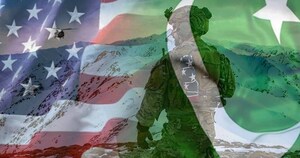 The Taliban government opposes the return of Americans to their former Bagram air base in Kabul, which Trump recently announced. India also opposes American return to Bagram as it eyes the base for its own potential presence in Afghanistan. This is an interesting position for India, which prides itself on its strategic autonomy despite being a member of Quadrilateral Indo-Pacific Dialogue Platform (QUAD) along with Japan, Australia and the US.
It goes without saying that Kabul’s more assertive diplomatic action and especially its rapprochement with New Delhi, have encouraged the military junta-backed regime in Islamabad to further curry favour with Trump and his administration in Washington, offering to the Americans a valuable piece of real estate in Balochistan province to build a new port in Pasni, specifically intended for the logistical assistance necessary for successful exploitation of rare earth minerals in this resource-rich but restive province of Pakistan.
The Pakistani military has been facing fierce insurgency from the Baloch liberation army (BLA) and other militant groups engaged in armed insurgency against Islamabad for more autonomy and even independence from Pakistan. Balochi rebels blame Islamabad and its imposed provincial government for exploiting Balochistan’s rich natural resources such as gold, gas, fisheries etc. at the expense of local population only to enrich Punjabi and Sindi majority political and military elites in Islamabad and Karachi.
In addition, local Balochis are also angered with the Pakistani central government for selling their resources to China to maintain its BRI “colonial” project in Pakistan and Central Asia, as they claim. Islamabad claims that India is involved in fomenting rebellion in Balochistan and therefore using momentum while Trump is president to draw in the US to Balochistan, in hope it will help Pakistan deal with the Balochi insurgency.
Although Pakistani officials claim that they want to attract America with their minerals, it could rather be said that this is about creating a climate for the construction of a new American logistics base that could be used as logistics for an attack on Iran in a possible conflict between the US and Iran, which some analysts claim could happen in the next few months.
 Osman Softić is a Research Fellow at the Islamic Renaissance Front. He holds a BA degree in Islamic Studies from the Faculty of Islamic Studies of the University of Sarajevo and has a Master degree in International Relations from the University of New South Wales (UNSW). He contributed commentaries on Middle Eastern and Islamic Affairs for the web portal Al Jazeera Balkans, Online Opinion, Engage and Open Democracy. Osman holds dual Bosnian and Australian citizenship.