
Osman Softic || 13 October 2025
Recently proposed Peace plan by the US president Donald Trump is evidently unjust and may prove impossible to implement. Yet, paradoxically, in the prevailing circumstances of regional and global power distribution it could be the last chance to put an end to genocide in Gaza and to ease the unbearable suffering of the Palestinian people.
 On 28-29. July 2025 foreign ministers of France and Saudi Arabia presented their joint initiative at the UN General Assembly in New York. This latest initiative looked at reviving the long-stalled Israeli-Palestinian “peace process”, postulated on the “two-state solution” model. Rashid Khalidi, a Palestinian-American historian of the Middle East at Columbia University, and one of the world’s leading authorities on Palestine, provided a sustained critique of the process in his book “Brokers of Deceit: How the U.S. Has Undermined Peace in the Middle East”, describing a role of the US government in it as deception rather than a genuine attempt to reach peace.
Professor Khalidi blamed the failure of the Oslo Accords and the ensuing years of allegedly pursuing peace, on Washington’s unwillingness to use its power and influence to force Israel to abide by the Oslo provisions. According to Khalidi, this was primarily due to U.S. officials’ clear servitude to Israeli interests at all times.
The July conference in New York brought together representatives from 120 countries. The United States and Israel notably did not attend it. During the conference foreign ministers Jean-Noël Barrot and prince Faisal bin Farhan emphasized the urgency of establishing an independent Palestinian state within the pre-1967 borders with East Jerusalem as its capital, as the only peace model officially supported by the United Nations. The “sanctity” of the pre-1967. borders which were altered during the 6 Day-war by Israeli victory over the Arab armies and subsequent Israeli occupation warrants a separate analysis, but this is not the aim of this analysis. The French and the Saudis persuaded western and Muslim countries that this was the only viable path to establishing the lasting peace in Palestine as a necessary precursor for a wider regional stability.
Riyadh pledged $300 million in humanitarian aid for Palestinians in Gaza and the West Bank, thus underscoring the Kingdom’s commitment to the reconstruction and development of Palestine. However, many diplomats and academic experts, including those who have worked for decades on the “Palestinian question” expressed concerns that the establishment of an independent Palestinian state coexisting peacefully alongside Israel, may not be a feasible option, at least not in the near future. Alas, the UN General Assembly overwhelmingly supported the joint French-Saudi “New York Declaration” calling for resolving the Israeli-Palestinian conflict on the basis of the revived old “two-state model”, with a vote of 142-10.
Trump’s Peace Plan
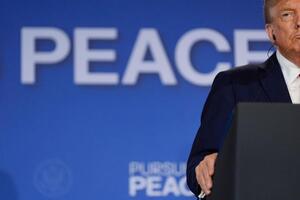
Then, on 29. September U.S. President Donald Trump announced his own Gaza peace plan. Ramesh Thakur, former UN assistant secretary general suggested the Trump’s peace plan could have been titled “Gaza: Today, tomorrow and the day after”, attributing Trump’s urgent desire to impose his plan on the Palestinians to his yearning for the Nobel Peace Prize. “If the bold and audacious 20-point Gaza peace plan succeeds, he will surely deserve the award”, lamented this seasoned former UN bureaucrat. “For it entails the end of Hamas as a governing force in Gaza and a security threat to Israel, gives Arabs the stability they seek in the region, promises a “terror-free” future for Israel and keeps alive the dream of a Palestinian state”, argued this former senior UN official.
Trump’s 20-point Gaza Peace Plan purportedly aims to halt the Palestinian suffering, ensure Israel’s withdrawal from the devastated Palestinian territory and secure long-term peace for both peoples. The plan was accepted by most Arab and Muslim countries including Türkiye and Qatar. These two countries are known to have openly supported the Palestinian Islamic resistance movement (Hamas) and for many years provided refuge to leaders of its political wing. After leaving Damascus in 2012 where Hamas was headquartered, due to bitter ideological disagreements with the former Assad regime whose ouster Hamas also tacitly supported by siding with Syrian opposition rebel groups at the time, its political core was relocated to Doha and Istanbul.
These two countries which provided sanctuary to Hamas are both close American allies. Turkey is the second biggest NATO member while Qatar is officially the closest strategic ally of Washington in the Arab world unlike other Arab monarchies that have informal security relations with Washington. Qatar also houses the Al-Udeid air base, the largest US military installation in the Middle East. This proves the assumption that both America and Turkey were willing to protect Hamas and perhaps even manipulate it for their own strategic purposes. Simultaneously, by doing so Washington clearly wanted to deny the Syrians and the Iranians an important strategic edge and advantage over Israel by “hijacking” Hamas and putting it under the state protection of its closest Muslim and Arab allies.
Nevertheless, Iran continued to provide financial and military support to Hamas although it never shared its ideological positions entirely. Arming the group as part of a broader regional policy of resistance against Israel and opposition to U.S. military presence in the region had always been Iran’s strategic position despite evident ideological and doctrinaire disagreements with Hamas. However, unlike other Muslim countries Iran does not support resolving the Palestinian question through a two-state model. Iran ultimately believes that the resistance to Israel, including by armed struggle, to be the only viable path for a true Palestinian liberation.
Iran does however insist on accepting whatever political decision Palestinians make for their future as their sovereign choice but it does not accept Israel as legitimate state, due to Israel’s regime racist and apartheid structure, arrogant political posture, military occupation of Palestine and other Arab and Muslim neighboring lands, and most importantly because of Israel’s proven intent at subjugation of the entire West Asia to its will.
The Islamic Resistance Movement – Hamas
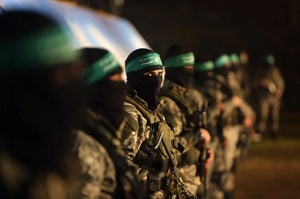 Most Arab countries, in a clear policy of appeasement of Israel, provided humanitarian and diplomatic support to the Palestinian people and advocated for resolving the Palestinian crisis through diplomatic means. They prefer maintaining what they call “constructive relations” with the Palestinian Authority in the West Bank. They also have a negative view of Hamas as a political movement. They oppose what they call the Muslim Brotherhood-derived “Islamist” ideology of Hamas and its continuous strategy of armed resistance to Israel.
Moreover, most Arab countries consider Hamas as an “irritant” and a “part of the problem”. Hence, they would like to see Hamas militarily destroyed and relegated to a political wilderness. Simultaneously, Most Arab leaders claim to be committed to their “principled stance” of assisting Palestinians despite an obvious contempt for their political choice and their right to offer an allegiance to whomever they believe best represents and protects their national interests.
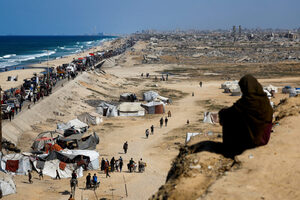
Hamas has governed Gaza Since 2007 under the condition of Israeli blockade and the siege that has lasted nearly two decades. During the past two years of continuous Israeli genocide in Gaza its civilian population has reached the brink of annihilation due to shelling and Israel’s policy of starvation. More than 67,000 Gaza residents have been killed, over 167,000 injured, and 10,000 are listed as missing. Over the past two decades, living conditions in Gaza have been described by the UN agencies, human rights organizations and even by credible Israeli observers and historians of the Israeli-Palestinian conflict, as the world’s largest open-air prison.
The French-Saudi Initiative
In contrast to this bleak reality on the ground, the French-Saudi initiative is symbolically significant, yet, given the Israeli military occupation of the West Bank and the ongoing genocide in Gaza, it does not guarantee the establishment of a sovereign Palestinian state with all the elements of statehood that such recognition entails, in any foreseeable future. The initiative could rather be described as “a roadmap” and an important step toward a Palestinian state. However, its realization is contingent on many factors, the worst of which is the Israeli regime’s resolve to oppose it by all means.
Paradoxically, alongside the Palestinian initiative and Trump’s peace plan, Israel launched its new ground offensive on Gaza city aimed at “eliminating the remnants of Hamas”. The practical effect of this offensive is the continuation of genocide and leveling of what remains of its residential structures. Meanwhile, Israeli extremists have announced plans to build new housing units for illegal Jewish settlers in the occupied West Bank. Israeli Prime Minister Netanyahu, for whom the International Criminal Court (ICC) issued an arrest warrant for suspected responsibility for crimes against humanity including genocide and other war crimes, insists that the occupied land belongs to Israeli Jews, threatening that a Palestinian state will never be established.
Despite this, Muslim and world leaders insist the French-Saudi initiative remains, for now, the only realistic basis for reviving negotiations on a Palestinian state which fell apart in 2014. Moreover, no one has yet devised any feasible alternative that would be widely accepted and supported by major international actors within the UN framework. Saudi Arabia’s decision to join France as co-sponsor of the conference reaffirms Riyadh’s earlier insistence on establishing a Palestinian state before any discussions on normalizing relations with Israel.
Interestingly enough, Trump’s Gaza Peace Plan has been accepted by countries that openly supported Hamas, Turkey and Qatar. These two countries, along with Egypt which alongside Qatar facilitated previous indirect peace talks, convinced Hamas leadership to accept the plan and save this latest opportunity for peace. Hamas has accepted the plan in principle and claimed it a victory for itself, but requested some amendments.
The Israeli side did not accept the plan in its original form either. Netanyahu and his minister for Strategy Ron Dermer modified it to align with Israel’s interests. Consequently, it was logical for Hamas to raise objections and request changes to the peace plan. It would be naive to believe that Trump’s plan is to the liking of the Palestinians. Far from it. Palestinian side was not even consulted before the Arab and Muslim countries accepted it.
However, this decision can be understood as a desire on the part of the Arab governments, which feel guilty for collectively failing to find an effective model to pressure the regime in Tel Aviv to halt the continued killing of innocent people and the destruction of Gaza. Therefore, motivation of Arab and Muslim countries to accept the plan appears to be their imperative to end genocide and alleviate the suffering of the people of Gaza.
The biased peace plan
Trump’s peace plan clearly favors Israel more than Hamas or the Palestinians. The Israeli side included significant, previously unachieved war objectives into the Trump peace plan. Release of hostages, demilitarization of Gaza by disarmament of Hamas, the establishment of a new administration without Hamas and the Palestinian Authority, and more. All these Israeli war aims became points of the plan.
The plan envisions the establishment of a technocratic administration, deployment of armed international peacekeeping forces to safeguard peace, and an international committee dubbed a “Peace Board” to oversee the plan’s execution. Donald Trump, at least formally, is expected to chair the Peace board. The executive position of this international body in which real power will be vested is expected to go to a former British Prime Minister Tony Blair. This is an unfortunate choice and reckless but deliberate choice. Blair was a leading proponent of the 2003 Iraq invasion. Moreover, he previously led the international Quartet in unsuccessful peace negotiations between Israel and the Palestinians.
However, this was evidently a bitter pill that Hamas and Muslim states had to swallow, for Israel to agree to a peace agreement format it could trust, and one not being directed against it. As noted in his article published in 2017. a well renowned Israeli historian and critic of Zionism, Avi Shlaim, described Tony Blair as a proven Zionist and a friend of Israel. Blair therefore seems to have been recommended as an insurance policy to guarantee Israel’s interests (fear of another renewed attack by Hamas) will be protected.
What likely tipped the scales for Arab and Muslim countries to accept Trump’s peace plan may have been a perception it carries a glimmer of hope that it could save Palestinian lives and ensure their survival in Gaza. Notably, Trump’s plan rejects any forced displacement of Gaza’s residents and explicitly rules out the possibility of Israeli annexation.
While the plan does not include the Palestinian Authority in the administrative governance of Gaza, as Mahmoud Abbas had hoped (at least not initially), as it insists on reforms to the Abbas administration in Ramallah, it provides for a possibility of administrative role for at least elements of the PA in the future, (most likely after Abbas).
Additionally, whilst the plan does not explicitly address the creation of a Palestinian state per se, it offers some support and leaves the door open for the Palestinian self-determination, a vague statement subject to multiple interpretations, which could also lead to a Palestinian state if the Palestinian side plays its cards well.
Critics of the Plan argue that these concessions to the Palestinians are insignificant and that the plan is generally flawed. However, certain aspects of the plan, though imperfect, indicate some positive changes in the U.S. policy on Palestine, and should not be underestimated. At its core, the plan envisions ending the war and releasing Israeli hostages and Palestinian prisoners, with negotiations already underway in Cairo. The Palestinian delegation is led by the Hamas political bureau chief Khalil Hayya. He narrowly escaped death in an assassination attempt during Israeli airstrikes on Doha on 9 September 2025.
Will the peace plan work?
The shortcomings of Trump’s plan include the lack of a clear timeline for its implementation and the absence of pressure on the Israeli regime to accept a two-state peace solution. The plan also lacks measures to counter the construction of illegal settlements in the occupied West Bank.
Israel clearly has the upper hand and can selectively implement the plan’s provisions after Hamas releases the remaining 48 Israelis it holds captive. Even the Arab countries that accepted the plan with a sincere intention of stopping the genocide in Gaza may end up withholding support for its implementation by refusing their participation in a peacekeeping mission, if the Palestinian sovereignty is not respected and if administrative authority from the West Bank is not extended to include Gaza as stipulated.
Critics of the Trump’s peace plan, not without foundation, described it in various terms, such as: a coercive ultimatum, an illusion, a new mandate in Palestine, renewed colonization, foreign domination, the marginalization of Hamas and the Palestinian Authority, the reduction of the Palestinian people to mere observers of a future shaped by occupiers and foreigners, and as support for Israeli dominance backed by Washington.
According to critics, Trump’s plan offers neither peace nor freedom but serves as a façade for new dependency and foreign oversight. “Gaza risks becoming a privatized, fenced-off colony, economically and politically controlled by Israeli and international actors, rather than a sovereign entity within a future Palestinian state”, charged a seasoned observer and one of the world’s leading humanitarian experts Fadlullah Wilmot. Other critics of the peace plan too believe the “Palestinians should reject it and demand a peace process grounded in genuine Palestinian rights and justice”.
American approach to the peace plan based on “take it or leave it” attitude, with the administration’s insistence on imposing “peace through strength” or leaving Gaza to Israel to “finish the job,” has become a familiar modus operandi of the U.S. administration towards the Middle East in recent years. If it does not respect the legitimate demands of the weaker (Palestinian) side, the US could destroy the peace plan from the very outset.
At the same time, however, imperfect as it may be, if the Palestinians were to completely reject the Trump’s peace plan, which they did not, it could become yet another missed opportunity, prolonging the Palestinian agony and sending a green light to the Zionist extremists in Tel Aviv and the extreme Jewish settler groups to complete the ethnic cleansing and the annexation of the entire Palestine.
A bitter Bosnian experience of three decades ago teaches us that even an imperfect and unjust peace is better than the continuation of genocide, which in this instance, could lead to annihilation of the entire Palestinian people.
 Osman Softić is a Research Fellow at the Islamic Renaissance Front. He holds a BA degree in Islamic Studies from the Faculty of Islamic Studies of the University of Sarajevo and has a Master degree in International Relations from the University of New South Wales (UNSW). He contributed commentaries on Middle Eastern and Islamic Affairs for the web portal Al Jazeera Balkans, Online Opinion, Engage and Open Democracy. Osman holds dual Bosnian and Australian citizenship.